

Industrial Property Leasing vs. Commercial Property Leasing, Key Differences
Choosing the right property is an important decision for any growing business. Industrial property leasing and commercial property leasing serve different business purposes, and understanding their differences can help businesses choose a space that fits their operations, budget, and long-term goals.
Whether you need a warehouse, manufacturing facility, retail shop, office, or business center, knowing what each property type offers is essential before signing a lease.
What Is Industrial Property Leasing?
Industrial property leasing involves renting spaces designed primarily for manufacturing, production, warehousing, storage, distribution, and logistics operations.
Common industrial properties include:
- Warehouses
- Manufacturing units
- Distribution centers
- Industrial sheds
- Logistics facilities
- Cold-storage facilities
- Workshops
- Production facilities
Industrial properties typically focus on functionality, accessibility, storage capacity, loading facilities, and operational requirements.
What Is Commercial Property Leasing?
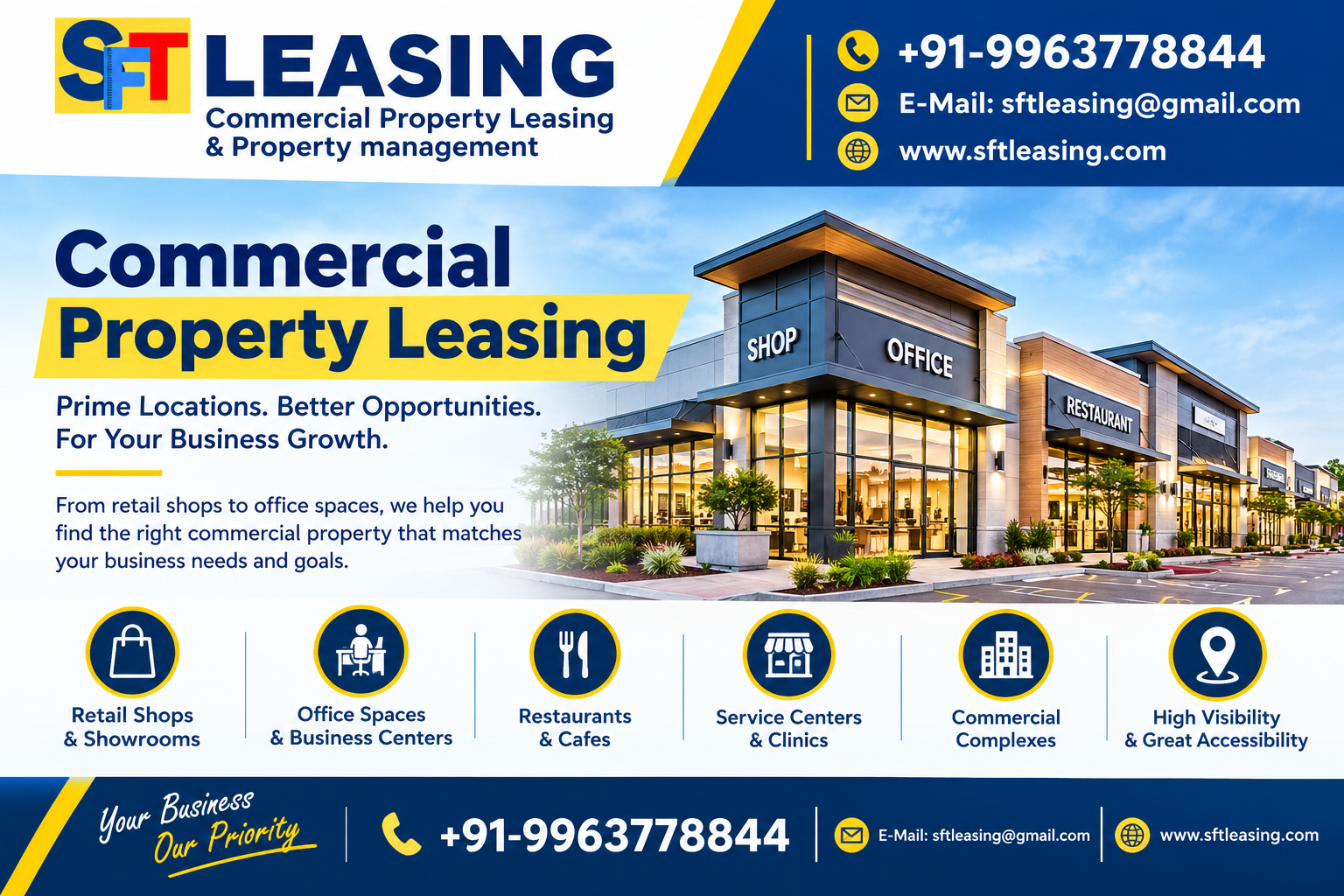
Commercial property leasing generally refers to renting spaces used for business, retail, office, professional, and customer-facing activities.
Examples include:
- Retail shops
- Office spaces
- Showrooms
- Business centers
- Restaurants
- Clinics
- Service centers
- Commercial complexes
These properties often place greater emphasis on location, customer accessibility, visibility, amenities, and business presentation.
Key Differences Between Industrial and Commercial Leasing
1. Primary Purpose
The biggest difference is how the property will be used.
Industrial leasing is generally focused on operations such as manufacturing, storage, production, and distribution.
Commercial leasing is commonly focused on activities such as sales, customer service, administration, professional services, and retail.
2. Location Requirements
Industrial businesses often prioritize:
- Highway connectivity
- Transport access
- Proximity to suppliers
- Access to logistics hubs
- Truck movement
- Availability of loading and unloading areas
Commercial businesses may prioritize:
- Customer foot traffic
- Visibility
- Public transportation
- Parking
- Nearby residential areas
- Accessibility for employees and customers
3. Property Features
Industrial properties may require specialized features such as:
- High ceilings
- Large floor areas
- Loading docks
- Heavy-duty flooring
- Wide entrances
- Truck access
- Storage areas
- Power capacity
- Industrial utilities
Commercial properties may instead emphasize:
- Reception areas
- Office layouts
- Retail frontage
- Signage opportunities
- Customer parking
- Air conditioning
- Elevators
- Common amenities
4. Lease Costs
Rental costs vary significantly based on location, property size, specifications, and market conditions.
For industrial properties, businesses should consider not only the base rent but also expenses related to maintenance, utilities, equipment requirements, loading facilities, and property modifications.
For commercial properties, businesses may need to budget for rent, maintenance charges, common-area expenses, utilities, interior fit-outs, signage, and other applicable charges.
5. Lease Terms
Industrial leases can involve longer commitments because businesses may invest significantly in equipment, storage systems, machinery, or facility modifications.
Commercial leases can also be long-term, particularly for established retail brands and offices, but lease structures vary depending on the property and business type.
Before signing, businesses should carefully review:
- Lease duration
- Security deposit
- Rent escalation
- Renewal conditions
- Maintenance responsibilities
- Permitted usage
- Exit clauses
- Modification permissions
6. Zoning and Permitted Use
This is particularly important for industrial properties.
A property may not automatically be suitable for every type of manufacturing, storage, or industrial activity. Businesses should verify permitted land use, local regulations, licenses, environmental requirements, and other applicable approvals.
Commercial tenants should similarly confirm that the property permits their intended activity, particularly for restaurants, healthcare businesses, educational facilities, and other regulated uses.
Industrial vs. Commercial Leasing: Quick Comparison
| Factor | Industrial Property Leasing | Commercial Property Leasing |
|---|---|---|
| Primary use | Manufacturing, storage, logistics | Retail, office, services |
| Location priority | Transport and logistics access | Customers, visibility and accessibility |
| Typical space | Warehouses, sheds, factories | Shops, offices, showrooms |
| Key features | Loading areas, high ceilings, power | Frontage, parking, amenities |
| Main users | Manufacturers, distributors, logistics companies | Retailers, professionals, service businesses |
| Fit-out needs | Machinery, storage, production systems | Interiors, furniture, displays |
| Accessibility | Trucks and freight vehicles | Customers and employees |
| Regulatory considerations | Industrial use and operational approvals | Commercial use and business-specific approvals |
How to Choose the Right Property
The right choice depends on your business model rather than simply the size or appearance of the property.
Consider these questions before leasing:
- What will the property be used for?
- How much space does the business actually need?
- Do you require loading or unloading facilities?
- Will customers visit the property regularly?
- Do you need heavy electrical capacity or specialized utilities?
- Is the location accessible to employees, customers, suppliers, and transport vehicles?
- What modifications will be required?
- What is your total occupancy budget?
- Does the property permit your intended business activity?
- What are the lease renewal and exit conditions?
Why Professional Leasing Assistance Can Help
Finding the right industrial or commercial property can involve more than comparing rental prices. Businesses need to evaluate location, accessibility, property specifications, lease conditions, operational requirements, and future expansion needs.
A commercial real estate professional can help businesses:
- Identify suitable properties
- Compare locations
- Evaluate property suitability
- Understand lease terms
- Coordinate property inspections
- Support lease negotiations
- Identify potential operational considerations
Conclusion
Industrial property leasing and commercial property leasing serve different business needs. Industrial properties are generally designed around production, storage, manufacturing, and logistics, while commercial properties are commonly focused on retail, office, customer service, and professional activities.
Before signing a lease, businesses should evaluate the property’s location, permitted use, infrastructure, operating requirements, total costs, lease terms, and future business needs.
Choosing a property based on operational requirements—not just rental price—can help create a more suitable foundation for long-term business growth.