

Commercial Property Rental for Warehouses and Industrial Businesses
Finding the right commercial property rental is an important decision for warehouses, manufacturing units, logistics companies, distributors, and other industrial businesses. The right property can improve operational efficiency, reduce transportation costs, support business growth, and provide better access to customers and suppliers.
Whether you need a small warehouse, a large industrial facility, a distribution center, or a manufacturing space, understanding the key factors involved in commercial property rental can help you make a more informed decision.
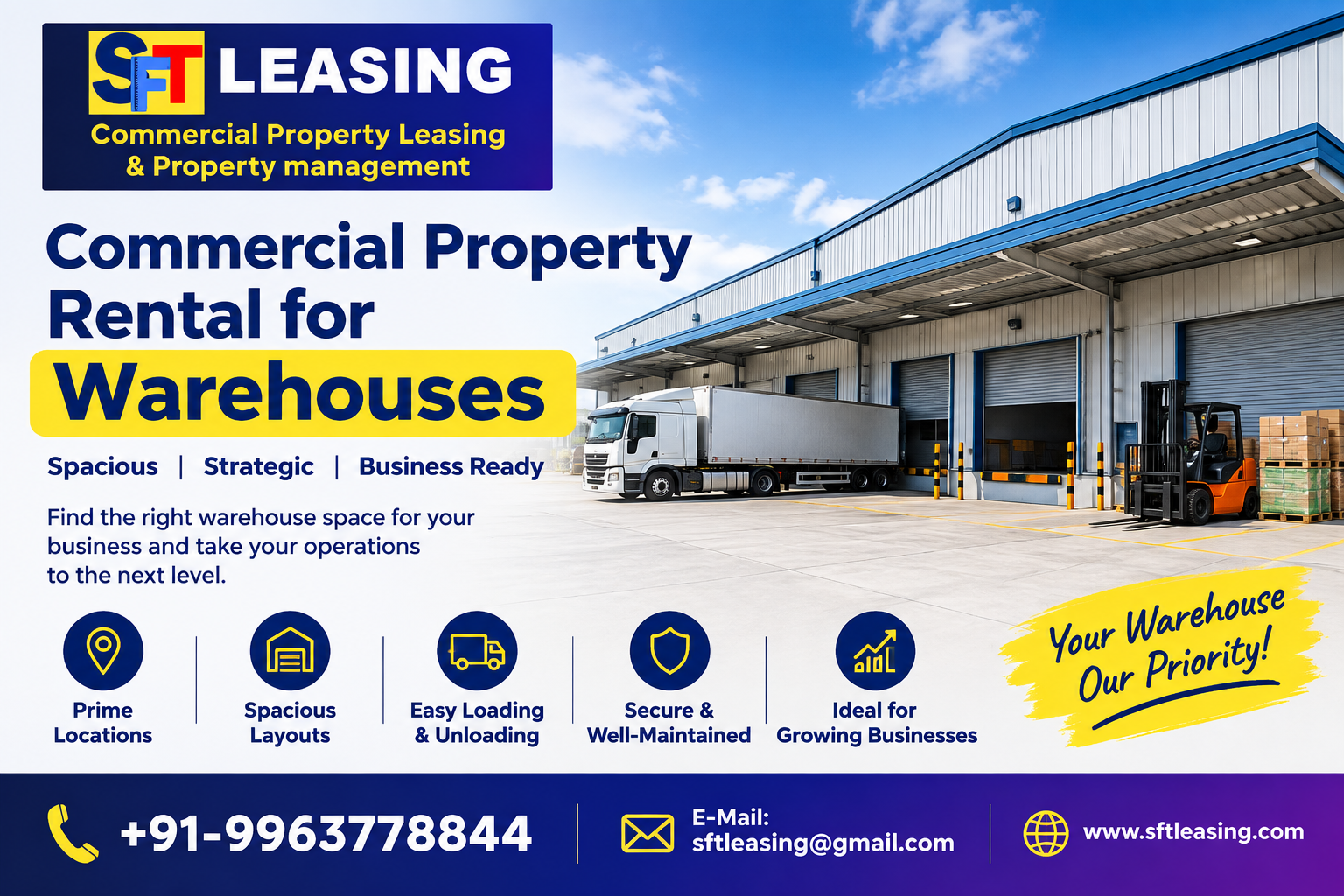
What Is Commercial Property Rental?
Commercial property rental refers to leasing a property for business or industrial purposes. Unlike residential properties, commercial spaces are designed to support business operations and may include warehouses, industrial buildings, logistics facilities, manufacturing units, storage facilities, and distribution centers.
Rental agreements can vary based on the property type, location, size, lease duration, facilities, maintenance responsibilities, and other terms negotiated between the property owner and tenant.
Why Location Matters for Warehouses and Industrial Businesses
Location is one of the most important factors when renting a commercial property.
For warehouse and industrial businesses, a suitable location can provide:
- Easy access to major roads and highways
- Better connectivity to suppliers and customers
- Convenient transportation for trucks and commercial vehicles
- Access to ports, airports, railway stations, or logistics hubs
- Availability of a suitable workforce
- Reduced transportation and distribution costs
- Potential for future business expansion
A property that offers good connectivity can help businesses manage deliveries and supply chains more efficiently.
Key Factors to Consider Before Renting a Warehouse or Industrial Property
1. Property Size and Layout
Choose a property that provides enough space for your current operations while allowing room for future growth.
Consider:
- Warehouse storage area
- Office space
- Loading and unloading areas
- Parking
- Equipment space
- Employee facilities
- Vehicle movement areas
- Future expansion requirements
The layout should support the way your business operates rather than simply focusing on the total square footage.
2. Loading and Unloading Facilities
For logistics, manufacturing, distribution, and warehouse businesses, loading facilities are extremely important.
Check whether the property provides:
- Loading docks
- Truck access
- Adequate turning radius
- Multiple loading points
- Easy entry and exit
- Space for temporary vehicle parking
Poor loading access can create delays and increase operational costs.
3. Ceiling Height and Storage Capacity
Warehouse businesses should carefully evaluate the property’s clear height. Higher ceilings may allow businesses to use vertical storage systems and maximize available space.
Consider your requirements for:
- Racking systems
- Pallet storage
- Machinery
- Inventory movement
- Automated storage systems
4. Accessibility and Transportation
Commercial properties used for industrial purposes should be easily accessible to the vehicles used by the business.
Before signing a lease, evaluate road conditions, traffic patterns, truck restrictions, and connectivity to major transportation routes.
5. Power Supply and Utilities
Manufacturing and industrial businesses may have significant electricity requirements.
Check:
- Available power capacity
- Backup power
- Water supply
- Drainage
- Internet connectivity
- Fire safety systems
- Waste management facilities
Make sure the property’s utilities can support your business operations.
6. Safety and Security
Security is another important consideration when renting a warehouse or industrial property.
Look for features such as:
- CCTV surveillance
- Security personnel
- Controlled access
- Fire detection systems
- Fire extinguishing equipment
- Emergency exits
- Adequate lighting
Businesses should also understand their responsibilities for maintaining safety standards during the lease period.
Understanding the Commercial Lease Agreement
Before renting a warehouse or industrial property, carefully review the lease agreement.
Important terms may include:
- Monthly rent
- Security deposit
- Lease duration
- Rent escalation
- Maintenance charges
- Property taxes
- Utility costs
- Repairs and maintenance responsibilities
- Insurance requirements
- Renewal conditions
- Termination clauses
- Permitted business activities
A clear understanding of these terms can help prevent misunderstandings later.
Calculate the Total Cost of Renting
The advertised rent is not always the complete cost of occupying a commercial property.
Businesses should consider additional expenses such as:
- Maintenance charges
- Utilities
- Property-related taxes, where applicable
- Security services
- Insurance
- Repairs
- Interior modifications
- Loading and handling infrastructure
- Parking or additional facility charges
Calculating the total occupancy cost can help businesses compare properties more accurately.
Check Zoning and Property Approvals
Before finalizing a property, confirm that the premises can legally be used for your intended business activity.
Depending on the location and type of operation, businesses may need to verify applicable:
- Zoning or land-use permissions
- Building approvals
- Fire safety requirements
- Environmental requirements
- Industrial permissions
- Local authority regulations
- Business-specific licenses
Professional legal or property advice can be useful when the regulatory requirements are complex.
Consider Future Business Growth
Your business may grow during the lease period. A warehouse that meets today’s requirements may become insufficient in a few years.
When evaluating a property, consider:
- Additional storage requirements
- Increased production
- More employees
- Higher vehicle movement
- Additional office space
- Expansion possibilities
Choosing a property with some flexibility can make future expansion easier.
Benefits of Working With a Commercial Leasing Consultant
Finding the right warehouse or industrial property can take considerable time and research. A commercial leasing consultant can help businesses identify suitable properties based on their operational requirements.
Professional assistance may include:
- Understanding business requirements
- Identifying suitable commercial properties
- Comparing locations
- Evaluating property features
- Supporting lease negotiations
- Reviewing commercial terms
- Coordinating property visits
- Helping businesses understand leasing considerations
The right guidance can make the property search more organized and efficient.
Common Mistakes to Avoid
Businesses should avoid making a rental decision based only on the monthly rent.
Common mistakes include:
- Choosing a property without checking accessibility
- Ignoring loading and unloading requirements
- Underestimating storage needs
- Failing to check power capacity
- Not reviewing lease escalation clauses
- Overlooking maintenance costs
- Ignoring future expansion
- Not verifying permitted business activities
- Rushing through the lease agreement
A detailed evaluation before signing can help reduce costly surprises later.
Final Thoughts
Commercial property rental for warehouses and industrial businesses requires careful planning. Location, property size, accessibility, loading facilities, utilities, safety, lease terms, and future expansion requirements should all be considered before making a decision.
Whether you are looking for a warehouse for storage, a distribution facility for logistics, or an industrial property for manufacturing, selecting a space that matches your operational needs can support smoother and more efficient business operations.
Working with an experienced commercial real estate professional can also help businesses identify suitable options and navigate the leasing process with greater clarity.
Looking for the right warehouse or industrial property for your business? Start by defining your operational requirements, budget, preferred location, and space requirements, then evaluate properties based on both current and future business needs.