

Warehouse Leasing Guide: Location, Size, Accessibility and Lease Terms
Finding the right warehouse is an important decision for businesses involved in manufacturing, distribution, e-commerce, logistics, retail, and storage. The right warehouse can improve operational efficiency, reduce transportation costs, and support long-term business growth.
However, choosing a warehouse involves more than simply comparing rental prices. Location, warehouse size, accessibility, facilities, and lease terms all need to be evaluated carefully before signing an agreement.
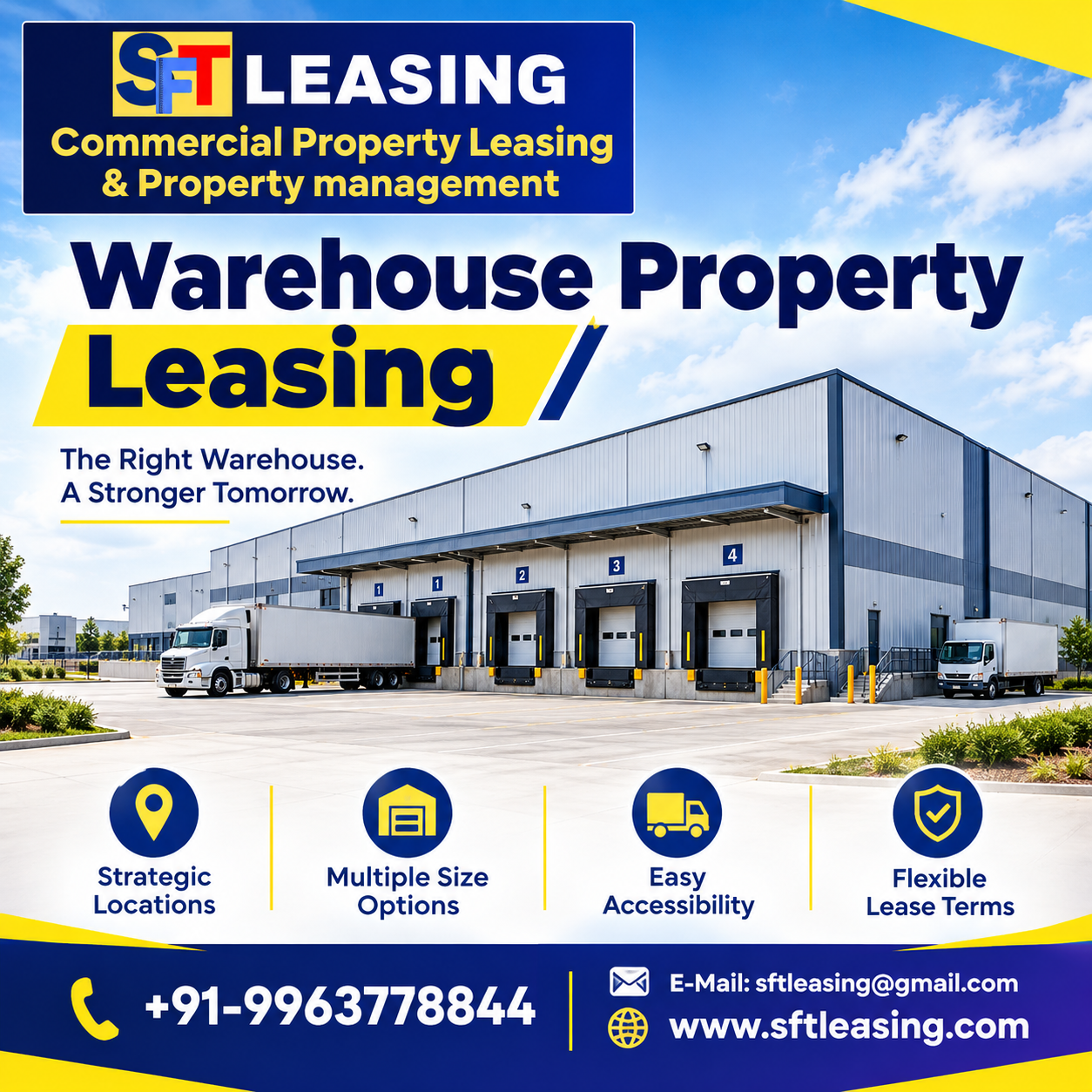
1. Choose the Right Warehouse Location
Location is one of the most important factors in warehouse leasing. A strategically located warehouse can reduce transportation time and make it easier to serve customers and suppliers.
Consider:
- Proximity to major highways and roads
- Distance from suppliers and manufacturing facilities
- Access to major markets and customers
- Availability of transportation services
- Proximity to ports, airports, railway stations, or logistics hubs
- Local infrastructure and road conditions
- Availability of workers in the surrounding area
A slightly higher rent may sometimes be justified if the location significantly reduces transportation and distribution costs.
2. Determine the Right Warehouse Size
Choosing the correct warehouse size is essential. A space that is too small can restrict operations, while an unnecessarily large facility can increase rental and operating expenses.
Before leasing, estimate your requirements for:
- Storage capacity
- Inventory levels
- Loading and unloading areas
- Office and administrative space
- Employee facilities
- Equipment and machinery
- Future business expansion
Don’t only consider your current requirements. If your business is expected to grow, look for a warehouse that provides reasonable flexibility for future expansion.
3. Evaluate Accessibility
A warehouse needs to be easily accessible for employees, suppliers, delivery vehicles, and customers.
Check whether the property provides:
- Wide approach roads
- Easy truck access
- Sufficient parking
- Loading and unloading areas
- Docking facilities
- Suitable entry and exit points
- Good connectivity to highways
- Access for large commercial vehicles
For logistics-intensive businesses, accessibility can have a direct impact on delivery schedules and operating costs.
4. Check Warehouse Infrastructure
The physical condition and specifications of the warehouse should be inspected before signing a lease.
Important factors include:
- Floor strength and condition
- Ceiling height
- Electrical capacity
- Ventilation
- Lighting
- Fire safety systems
- Drainage
- Water supply
- Security systems
- Loading docks
- Power backup, where required
Depending on your business, you may also need specialized infrastructure such as temperature control, cold storage, heavy electrical connections, or specific fire-protection systems.
5. Understand the Lease Terms
The lease agreement should clearly explain the financial and operational responsibilities of both the landlord and tenant.
Pay attention to:
- Monthly or annual rent
- Security deposit
- Lease duration
- Rent escalation
- Maintenance charges
- Taxes and other applicable costs
- Renewal options
- Notice period
- Permitted use of the property
- Repair and maintenance responsibilities
- Subleasing or assignment provisions
- Termination conditions
Never rely only on verbal discussions. Make sure important commercial terms are documented in the lease agreement.
6. Calculate the Total Occupancy Cost
The advertised rent is not always the complete cost of leasing a warehouse.
Your total occupancy cost may include:
Rent + Maintenance + Utilities + Taxes/Charges + Security + Insurance + Transportation-related Costs
Comparing warehouses based on total operating costs rather than rent alone can provide a more realistic picture of affordability.
7. Consider Business Growth
Your warehouse should support your business strategy rather than create limitations.
Ask yourself:
- Will inventory requirements increase?
- Will the number of employees grow?
- Will additional loading space be required?
- Could operations expand into adjacent space?
- Is lease renewal possible?
- Can the property accommodate future operational requirements?
A flexible lease and scalable facility can make expansion easier.
8. Inspect the Property Before Signing
Always conduct a physical inspection before committing to a warehouse lease.
During the inspection, check the building condition, access roads, loading areas, utilities, security, drainage, fire-safety infrastructure, and surrounding environment.
It is also useful to visit the property at different times of day to understand traffic conditions and accessibility.
9. Work With a Warehouse Leasing Consultant
Finding the right warehouse can be time-consuming, particularly when comparing multiple properties and negotiating lease terms.
A warehouse leasing consultant can help businesses:
- Identify suitable warehouse properties
- Compare locations and facilities
- Evaluate space requirements
- Understand market rental conditions
- Coordinate property inspections
- Negotiate commercial terms
- Review important lease considerations
- Support the leasing process
Professional assistance can make the property search more structured and efficient.
Conclusion
Choosing the right warehouse requires careful consideration of location, size, accessibility, infrastructure, total costs, and lease terms. The cheapest warehouse is not necessarily the most suitable one. Businesses should evaluate how each property will affect logistics, operations, costs, and future growth.
By clearly defining your requirements and carefully reviewing the property and lease agreement, you can make a more informed warehouse leasing decision and choose a facility that supports your business objectives.