

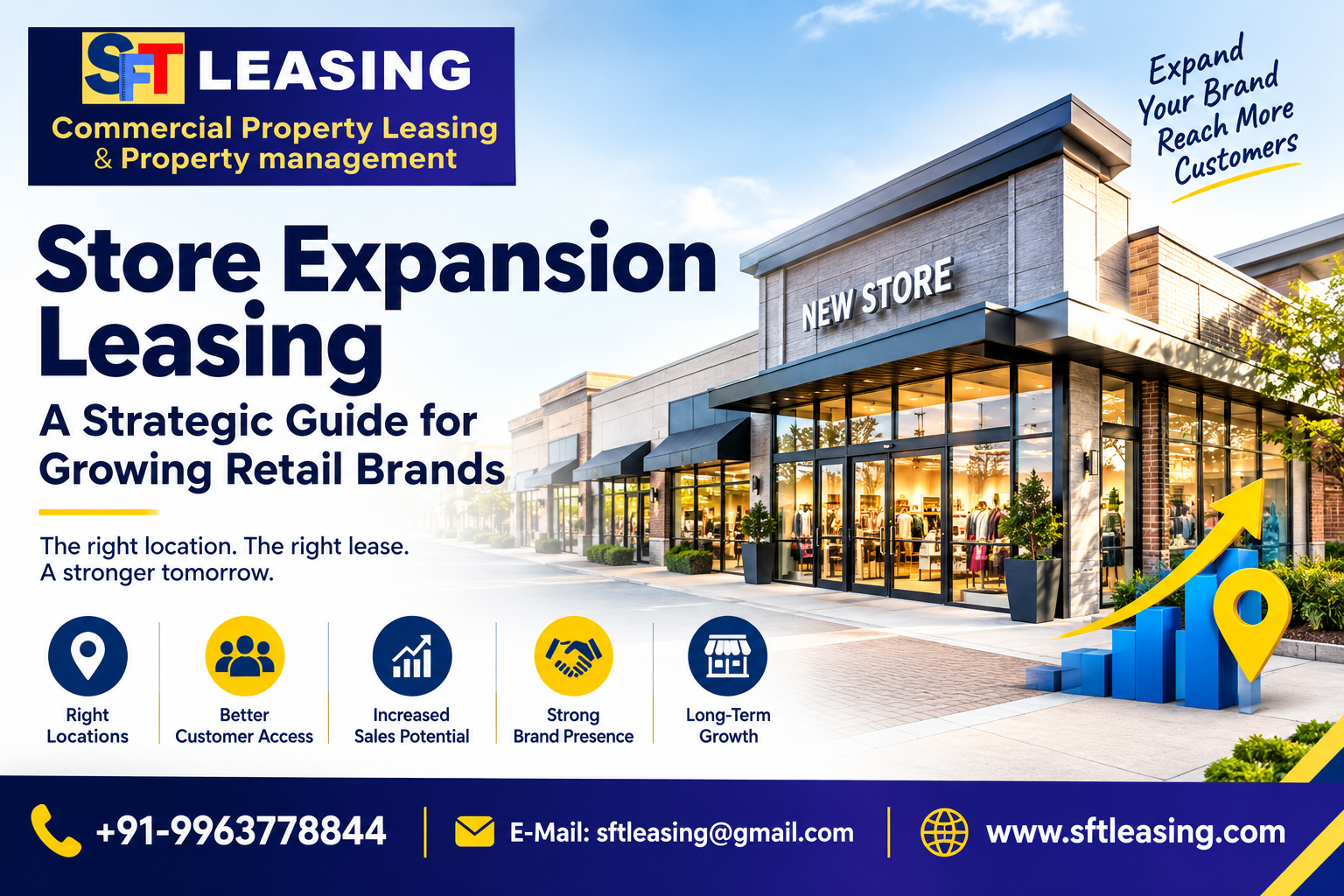
Store Expansion Leasing, A Strategic Guide for Growing Retail Brands
Expanding into new locations is an exciting milestone for any growing retail brand. Whether you operate fashion stores, supermarkets, restaurants, electronics outlets, beauty stores, or specialty retail businesses, choosing the right commercial space can have a major impact on your expansion strategy.
Store expansion leasing is more than simply finding an available property. It involves evaluating locations, understanding customer demographics, negotiating lease terms, managing costs, and ensuring that each new store supports the brand’s long-term growth.
This guide explains the key factors retail businesses should consider when planning a successful store expansion.
What Is Store Expansion Leasing?
Store expansion leasing is the process of identifying, evaluating, negotiating, and securing commercial properties for opening additional retail outlets.
As a brand grows, it may consider locations such as:
- Shopping malls
- High-street retail spaces
- Commercial complexes
- Neighborhood shopping centers
- Standalone retail buildings
- Mixed-use developments
- Transit-oriented commercial areas
The objective is to select locations that provide the right combination of customer access, visibility, affordability, and growth potential.
Why Location Matters in Retail Expansion
Location can directly influence customer traffic, sales opportunities, brand visibility, and operating costs.
A successful retail location should ideally provide:
- Strong customer footfall
- Easy accessibility
- Good visibility
- Convenient parking or transportation access
- Proximity to the target customer base
- Complementary businesses nearby
- Appropriate surrounding demographics
- Sufficient space for the store concept
A location with lower rent is not necessarily the most cost-effective option if it generates limited customer traffic.
Key Factors to Consider Before Leasing a New Store
1. Define Your Target Customer
Before searching for properties, understand who your ideal customers are.
Consider factors such as:
- Age group
- Income levels
- Lifestyle
- Purchasing behavior
- Family profile
- Shopping preferences
- Geographic concentration
A location should match the demographic profile of your target market.
2. Analyze Market Demand
Research the local market before committing to a lease.
Look at:
- Existing competitors
- Customer demand
- Population growth
- New residential developments
- Commercial activity
- Traffic patterns
- Future infrastructure projects
- Nearby businesses and anchors
This analysis can help identify areas where your brand may have room to grow.
3. Evaluate Foot Traffic and Visibility
For many retail businesses, visibility and customer movement are critical.
Evaluate:
- Pedestrian traffic
- Vehicle traffic
- Storefront visibility
- Signage opportunities
- Entrance accessibility
- Nearby parking
- Public transportation access
A highly visible location can provide ongoing brand exposure in addition to customer visits.
4. Calculate Total Occupancy Costs
Rent is only one component of the cost of leasing a retail property.
Your financial analysis should consider:
- Base rent
- Security deposit
- Common area maintenance charges
- Property taxes, where applicable
- Utilities
- Insurance
- Maintenance
- Fit-out expenses
- Signage costs
- Renovation expenses
- Lease registration and other applicable charges
Understanding the complete occupancy cost gives your business a clearer picture of whether a location is financially sustainable.
Understanding Retail Lease Terms
Before signing a lease, carefully review the major commercial terms.
Important considerations include:
Lease Duration
Determine whether the proposed lease period aligns with your expansion strategy.
Rent Escalation
Understand how and when rent may increase during the lease term.
Security Deposit
Review the required deposit and the conditions governing its refund.
Lock-In Period
Some commercial leases include a minimum commitment period. Understand the financial implications before agreeing.
Renewal Options
A renewal clause can provide greater certainty if the location performs well.
Exit and Termination Conditions
Understand the circumstances under which either party can terminate the agreement and what costs may apply.
Fit-Out and Handover Conditions
Clarify who is responsible for construction, improvements, repairs, and restoration when the lease ends.
Negotiating a Store Expansion Lease
Growing retail brands may have stronger negotiating opportunities when leasing multiple locations.
Depending on the property and market, businesses may negotiate:
- Rent-free periods
- Fit-out periods
- Rent escalation
- Security deposits
- Lease tenure
- Renewal options
- Signage rights
- Parking arrangements
- Maintenance charges
- Exclusivity clauses
- Early termination provisions
Every location is different, so lease terms should be evaluated based on the property’s commercial potential and the retailer’s financial model.
Standardize Your Expansion Strategy
When opening multiple stores, consistency can make the expansion process more efficient.
Develop a standard location checklist covering:
- Minimum store size
- Preferred catchment area
- Target customer profile
- Minimum visibility requirements
- Parking requirements
- Acceptable occupancy cost
- Expected sales potential
- Competition levels
- Required infrastructure
- Preferred lease terms
A standardized process allows businesses to compare different properties more objectively.
The Role of a Commercial Leasing Consultant
Managing multiple property searches and lease negotiations can become complicated as a retail brand expands.
A commercial leasing consultant can assist with:
- Identifying suitable properties
- Conducting market research
- Comparing locations
- Reviewing commercial terms
- Coordinating property inspections
- Supporting lease negotiations
- Evaluating expansion opportunities
- Managing multiple leasing requirements
Professional guidance can help retailers organize the property-selection process and make decisions based on business requirements rather than simply choosing the most attractive available property.
Common Mistakes Retailers Should Avoid
Choosing a Location Based Only on Low Rent
Lower rent does not automatically mean lower business costs. Customer traffic and revenue potential must also be considered.
Ignoring the Catchment Area
A store should be located where the target customers actually live, work, or shop.
Underestimating Fit-Out Costs
Retail interiors can require significant investment. Include these costs in the expansion budget before signing the lease.
Overlooking Lease Clauses
Small details in a commercial lease can have major financial consequences. Review all important clauses carefully.
Expanding Too Quickly
Opening several locations at once can put pressure on cash flow and operational resources. Expansion should be supported by realistic financial and operational planning.
Creating a Store Expansion Roadmap
A structured expansion plan can make the leasing process more manageable.
Step 1: Establish Expansion Goals
Determine how many stores you want to open and the markets you want to enter.
Step 2: Define Location Criteria
Create clear requirements for size, demographics, visibility, accessibility, and occupancy costs.
Step 3: Research Potential Markets
Analyze customer demand, competitors, infrastructure, and future development.
Step 4: Shortlist Properties
Compare multiple properties using the same evaluation criteria.
Step 5: Conduct Site Visits
Inspect the property, surrounding area, access points, visibility, parking, and neighboring businesses.
Step 6: Evaluate Financial Viability
Estimate rent, operating expenses, fit-out costs, projected sales, and other expenses.
Step 7: Negotiate the Lease
Work through rent, deposits, escalation, tenure, fit-out periods, renewal options, and other important terms.
Step 8: Finalize and Launch
Complete documentation, fit out the store, install branding, and prepare for opening.
Technology and Data in Store Expansion
Modern retailers can use data to make location decisions more effectively.
Useful information can include:
- Customer demographics
- Footfall data
- Sales performance from existing stores
- Competitor locations
- Online customer behavior
- Traffic patterns
- Population growth
- Local development plans
Combining data with on-the-ground market research can provide a more complete picture of a potential location.
Final Thoughts
Store expansion leasing is a strategic business decision, not simply a property transaction.
The right location can improve customer access, strengthen brand visibility, support sales growth, and create a foundation for long-term expansion. At the same time, an unsuitable lease can increase operating costs and limit a store’s potential.
Retail brands should therefore evaluate every location from both a real-estate perspective and a business perspective. By combining market research, financial analysis, careful lease negotiation, and professional commercial leasing support, businesses can build a more structured and sustainable store expansion strategy.
Whether you’re opening your second location or planning a nationwide retail rollout, a well-planned leasing strategy can help turn expansion opportunities into successful retail locations.