

Here is a professional, SEO-friendly blog post you can use for your website and social media marketing.
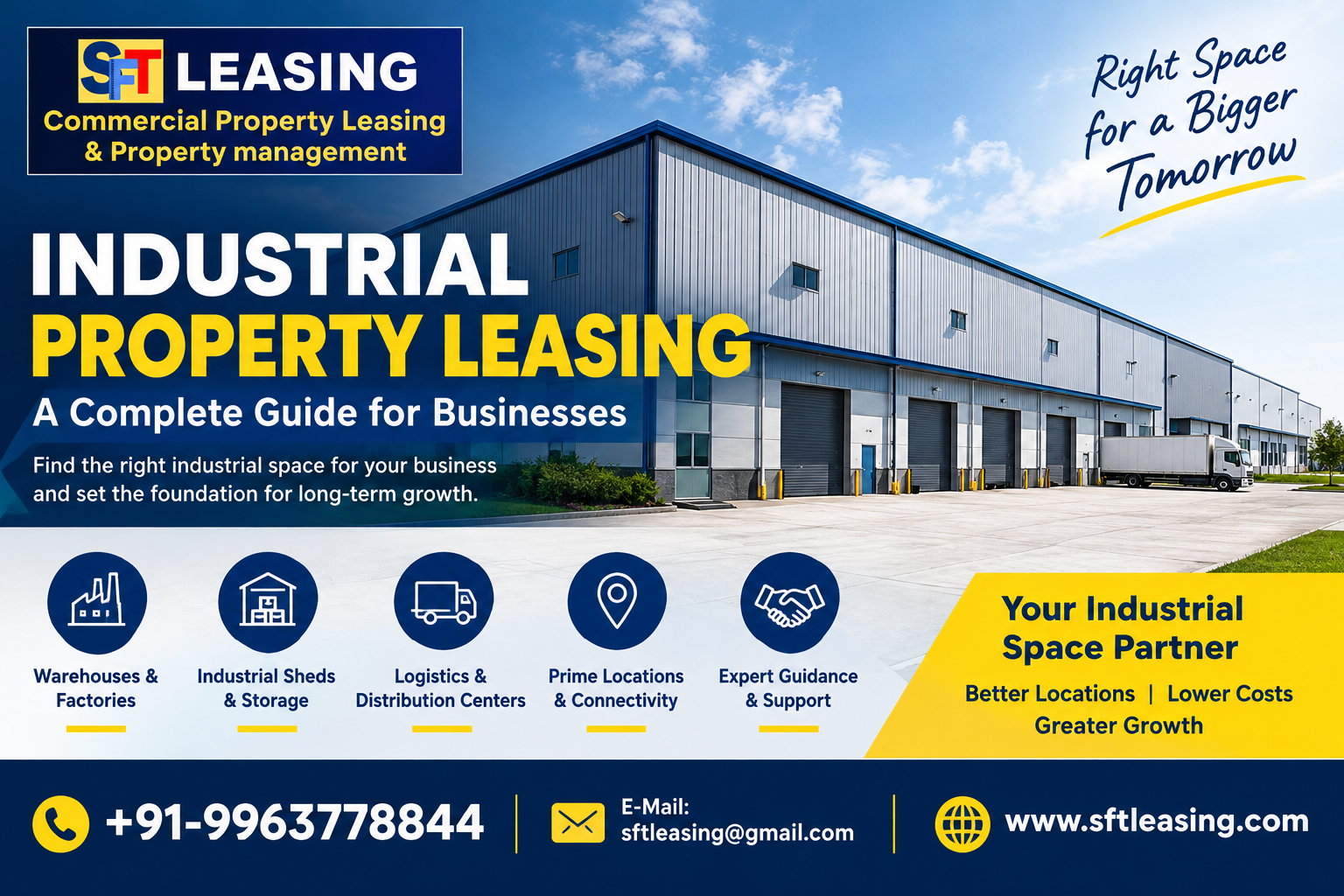
Industrial Property Leasing, A Complete Guide for Businesses
Finding the right industrial property is an important decision for businesses involved in manufacturing, warehousing, logistics, distribution, and other industrial operations. The right location can improve operational efficiency, reduce transportation costs, support business growth, and provide a better working environment.
Industrial property leasing allows businesses to access suitable facilities without the large upfront investment associated with purchasing a property. However, choosing and leasing an industrial space requires careful evaluation of location, infrastructure, lease terms, costs, and future business requirements.
This complete guide explains the key factors businesses should consider before leasing an industrial property.
What Is Industrial Property Leasing?
Industrial property leasing involves renting a property designed for business operations such as manufacturing, storage, warehousing, assembly, logistics, or distribution.
Industrial properties can include:
- Warehouses
- Manufacturing facilities
- Industrial sheds
- Distribution centers
- Logistics facilities
- Factories
- Industrial plots with built-up structures
- Cold-storage and specialized facilities
The ideal property depends on the nature, size, and operational requirements of your business.
Why Lease an Industrial Property?
Leasing can provide several advantages for growing businesses.
1. Lower Initial Investment
Leasing generally requires less upfront capital than purchasing an industrial property. Businesses can preserve capital for equipment, employees, inventory, technology, and expansion.
2. Greater Flexibility
Businesses can select a property based on their current operational needs and potentially relocate or expand when requirements change.
3. Access to Strategic Locations
Leasing can make it easier for businesses to operate near major highways, ports, airports, suppliers, customers, and labor markets.
4. Easier Business Expansion
A carefully selected industrial facility can provide room for additional machinery, inventory, employees, or production capacity.
Key Factors to Consider Before Leasing
Choosing an industrial property should involve more than simply comparing rental prices.
Location
Location is one of the most important factors. Consider:
- Proximity to highways and major roads
- Access to transportation networks
- Distance from suppliers and customers
- Availability of labor
- Connectivity to ports, airports, and railway facilities
- Local infrastructure
- Future development potential
A well-connected location can help reduce transportation time and operating costs.
Property Size and Layout
Determine how much space your business actually requires. Consider production areas, storage, offices, loading zones, parking, employee facilities, and future expansion.
A property that is too small can restrict growth, while excessive space can result in unnecessary rental and maintenance costs.
Building Specifications
Evaluate the physical characteristics of the property, including:
- Ceiling height
- Floor loading capacity
- Column spacing
- Loading and unloading areas
- Dock facilities
- Electrical capacity
- Water supply
- Drainage
- Ventilation
- Fire-safety infrastructure
- Security systems
These specifications should match the operational requirements of your business.
Understand the Total Cost of Leasing
Rental price is only one component of the total occupancy cost.
Businesses should review:
- Monthly or annual rent
- Security deposit
- Maintenance charges
- Common-area expenses
- Property taxes, where applicable
- Utilities
- Insurance
- Parking charges
- Repairs and maintenance responsibilities
- Taxes and other applicable charges
Understanding the complete cost structure helps prevent unexpected expenses after signing the lease.
Review the Lease Agreement Carefully
Before signing an industrial property lease, carefully review the agreement and understand every major clause.
Important areas include:
Lease Duration
Understand the initial lease period and whether renewal options are available.
Rent Escalation
Check how and when the rent can increase during the lease period.
Security Deposit
Confirm the deposit amount, refund conditions, and circumstances under which deductions may be made.
Maintenance Responsibilities
Clearly establish whether the landlord or tenant is responsible for structural repairs, equipment, utilities, common areas, and routine maintenance.
Termination and Exit Clauses
Understand the notice period, early termination conditions, penalties, and other exit requirements.
Permitted Use
Make sure the lease permits your intended industrial activity and complies with applicable local regulations.
Check Approvals and Compliance Requirements
Businesses should verify that the property is suitable for the intended industrial use.
Depending on the business and location, this may involve checking:
- Land-use permissions
- Building approvals
- Fire-safety requirements
- Environmental requirements
- Factory-related permissions
- Power and utility approvals
- Local authority regulations
- Access and operational restrictions
Professional legal and technical advice can help businesses identify potential compliance issues before committing to a lease.
Evaluate Accessibility and Logistics
For industrial businesses, transportation efficiency can have a significant impact on operating costs.
Assess whether the property can accommodate:
- Trucks and heavy vehicles
- Loading and unloading activities
- Employee transportation
- Supplier deliveries
- Customer access
- Adequate parking
- Round-the-clock operations, if required
The surrounding road network and traffic conditions should also be considered.
Inspect the Property Before Signing
A physical inspection can reveal issues that may not be obvious from photographs or property listings.
During an inspection, check:
- Structural condition
- Roof condition
- Flooring
- Electrical systems
- Plumbing
- Fire-safety equipment
- Security
- Loading areas
- Drainage
- Water availability
- Internet and communication connectivity
- Overall accessibility
Document existing defects and clarify responsibility for repairs before signing the agreement.
Plan for Future Business Growth
Your industrial property should support your business not only today but also over the lease period.
Ask yourself:
- Will additional storage be required?
- Could production capacity increase?
- Will more employees be needed?
- Is additional parking necessary?
- Can machinery be added?
- Is expansion space available nearby?
Planning ahead can reduce the need for an expensive relocation later.
Work With an Industrial Property Leasing Consultant
Finding and negotiating an industrial property can be time-consuming, particularly when businesses have specific operational requirements.
An experienced industrial property leasing consultant can assist with:
- Identifying suitable properties
- Comparing locations
- Understanding property specifications
- Evaluating rental costs
- Coordinating property inspections
- Negotiating commercial terms
- Reviewing key lease considerations
- Supporting the leasing process
Professional guidance can help businesses make more informed property decisions and reduce avoidable leasing risks.
Common Mistakes to Avoid
Businesses should avoid these common mistakes when leasing industrial property:
Choosing based only on rent: A low rental price may not compensate for poor connectivity or inadequate infrastructure.
Ignoring future expansion: A property that meets today’s requirements may become unsuitable as the business grows.
Not checking permitted use: Confirm that the property can legally accommodate your intended operations.
Overlooking hidden costs: Review maintenance, utilities, taxes, deposits, and other charges.
Skipping property inspection: Always inspect the facility and document its condition.
Accepting lease terms without negotiation: Depending on the circumstances, rental rates, escalation, tenure, maintenance, and other commercial terms may be negotiable.
Conclusion
Industrial property leasing is a significant business decision that requires careful planning and evaluation. From location and infrastructure to lease terms, compliance, logistics, and future expansion, every factor can influence the overall success of your business operations.
By clearly defining your requirements, evaluating the complete cost of occupancy, inspecting properties carefully, and understanding the lease agreement, businesses can make more informed leasing decisions.
Whether you need a warehouse, factory, industrial shed, logistics facility, or manufacturing space, professional commercial real estate guidance can simplify the search and help you identify properties that align with your business objectives.
Looking for the right industrial property for your business? Professional commercial real estate advisors can help you explore suitable leasing opportunities and navigate the leasing process with greater confidence.
SEO Keywords
- Industrial Property Leasing
- Industrial Property for Lease
- Industrial Space for Lease
- Industrial Warehouse for Rent
- Industrial Shed for Lease
- Factory for Lease
- Commercial Industrial Property
- Industrial Property Leasing Consultant
- Industrial Real Estate
- Industrial Space Rental
If you want, I can also create a professional blog-post image with the headline “Industrial Property Leasing” to match this article.