

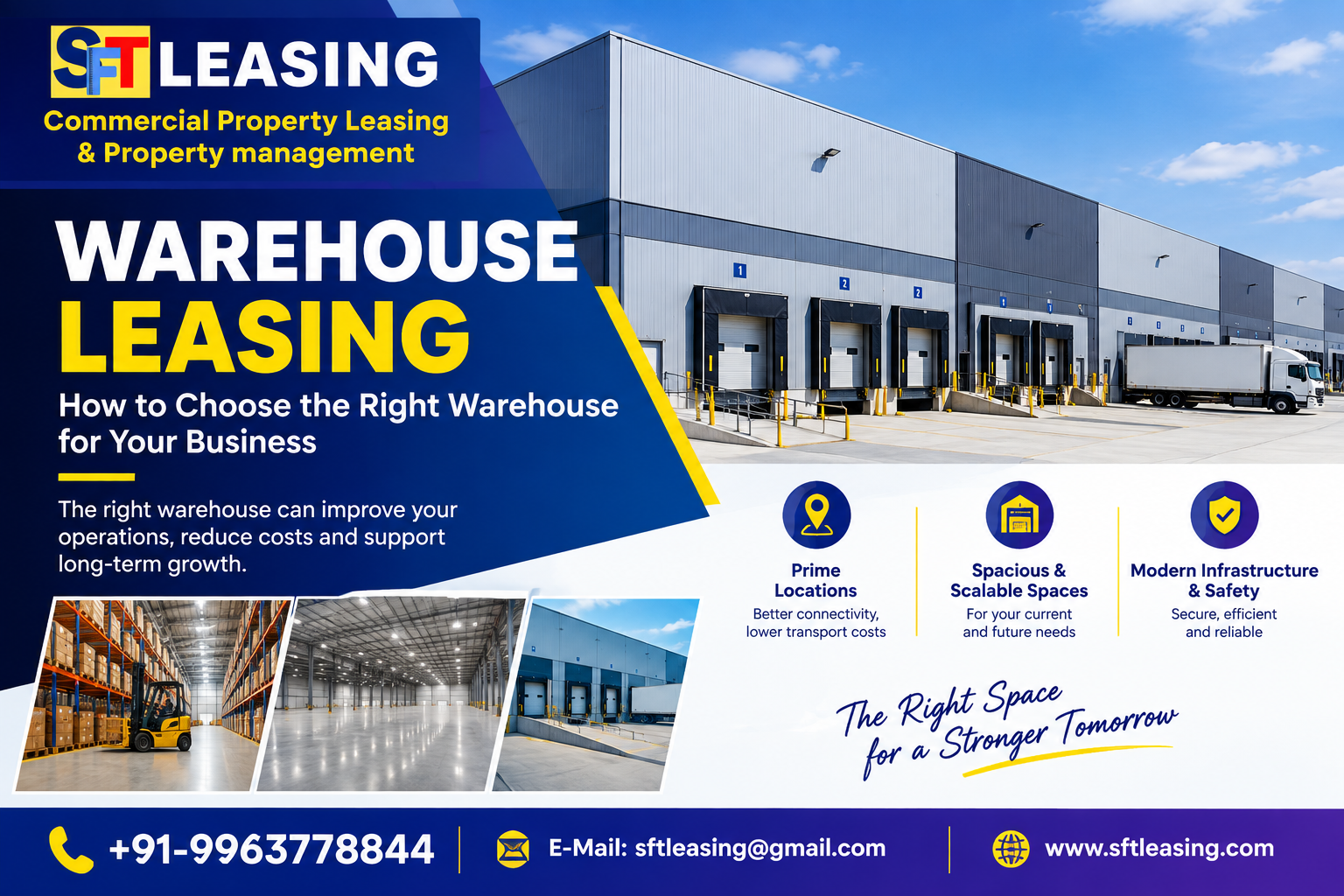
Warehouse Leasing, How to Choose the Right Warehouse for Your Business
Finding the right warehouse is an important decision for businesses involved in logistics, manufacturing, distribution, e-commerce, retail, and inventory management. The right warehouse can improve operational efficiency, reduce transportation costs, and provide room for future growth.
With many warehouses available for lease, businesses need to look beyond rental price and carefully evaluate location, size, infrastructure, accessibility, lease terms, and overall suitability.
In this guide, we’ll explain the key factors to consider when choosing the right warehouse for your business.
What Is Warehouse Leasing?
Warehouse leasing is the process of renting a warehouse or industrial property for business operations for an agreed period and rental amount.
Instead of purchasing a warehouse, businesses can lease a suitable facility and use their capital for inventory, equipment, employees, marketing, and expansion.
Warehouse leasing can be suitable for:
- E-commerce businesses
- Logistics and distribution companies
- Manufacturers
- Wholesalers
- Retail businesses
- Import and export businesses
- FMCG companies
- Pharmaceutical and other storage businesses
- Third-party logistics providers
1. Determine Your Warehouse Requirements
Before searching for a warehouse, clearly understand what your business needs.
Consider:
- Required storage capacity
- Type and quantity of inventory
- Number of employees
- Loading and unloading requirements
- Storage racks and equipment
- Office space
- Packaging or processing areas
- Vehicle parking
- Expected future growth
Having a clear requirement makes it easier to shortlist suitable properties and avoid paying for unnecessary space.
2. Choose the Right Location
Location is one of the most important factors in warehouse leasing.
A strategically located warehouse can help reduce transportation time and improve delivery efficiency.
Look for a location with:
- Good road connectivity
- Easy truck access
- Proximity to major highways
- Access to suppliers and customers
- Nearby logistics hubs
- Reliable transportation infrastructure
- Convenient access for employees
For businesses that handle frequent deliveries, even a small improvement in location can make a significant difference to daily operations.
3. Select the Appropriate Warehouse Size
Choosing the right size is essential.
A warehouse that is too small may create congestion and storage problems, while a warehouse that is unnecessarily large can increase rental and maintenance expenses.
Calculate space requirements for:
Storage + Loading/Unloading + Material Movement + Office Space + Employee Facilities + Future Expansion
Also consider the warehouse’s usable area, rather than looking only at the total built-up area.
4. Evaluate Warehouse Infrastructure
The physical condition and specifications of a warehouse can directly affect your operations.
Check important features such as:
Clear Height
Higher ceilings can provide greater opportunities for vertical storage.
Flooring
Check floor condition and load-bearing capacity, especially if heavy machinery or forklifts will be used.
Loading Docks
Make sure there is adequate loading and unloading infrastructure for your vehicles.
Power Supply
Businesses using machinery or refrigeration may require a reliable and adequate electricity supply.
Ventilation
Good ventilation is important for employee comfort and certain types of inventory.
Security
Look for CCTV, security personnel, controlled access, lighting, and other security measures.
Fire Safety
Check available fire protection systems, emergency exits, alarms, and applicable safety approvals.
5. Consider Truck and Vehicle Accessibility
Warehouse operations depend heavily on the movement of vehicles.
Before leasing a warehouse, check:
- Truck entry and exit
- Road width
- Turning space
- Loading areas
- Parking
- Traffic conditions
- Restrictions on heavy vehicles
- Distance from major transportation routes
A warehouse may have excellent storage space but still create operational challenges if large commercial vehicles cannot access it efficiently.
6. Calculate the Total Cost of Leasing
Don’t evaluate a warehouse only by its monthly rent.
Consider the complete cost of occupancy, including:
- Monthly rental
- Security deposit
- Maintenance charges
- Electricity
- Water
- Property-related charges
- Taxes or applicable statutory costs
- Fit-out expenses
- Insurance
- Repairs and maintenance
- Transportation costs
A warehouse with a slightly higher rent may have lower overall operating costs if it provides better connectivity and infrastructure.
7. Review the Lease Agreement Carefully
Before signing a warehouse lease, carefully review all major terms and conditions.
Pay attention to:
- Lease duration
- Monthly rent
- Security deposit
- Rent escalation
- Lock-in period
- Notice period
- Renewal options
- Maintenance responsibilities
- Repair responsibilities
- Permitted business activities
- Subleasing provisions
- Termination conditions
- Handover requirements
It is advisable to have the agreement reviewed by a qualified legal professional before signing.
8. Verify Legal and Regulatory Requirements
Make sure the warehouse is legally suitable for your intended business activity.
Depending on the property and location, you may need to verify:
- Ownership and title documents
- Building approvals
- Permitted land use
- Occupancy-related approvals
- Fire safety requirements
- Environmental requirements
- Local authority permissions
- Industrial/commercial usage permissions
The specific requirements can vary by location and business activity, so appropriate professional and local-authority verification is important.
9. Think About Future Business Growth
Your warehouse should support your business as it grows.
Ask yourself:
- Will I need additional storage in the next few years?
- Can the warehouse accommodate more inventory?
- Is there space for additional racks?
- Can the layout be modified?
- Can I expand into adjacent space?
- Does the lease provide suitable renewal options?
Planning for future growth can help reduce the need for an expensive and disruptive relocation.
10. Inspect the Warehouse Before Leasing
Never rely solely on photographs or property listings.
Visit the warehouse and inspect it personally.
Warehouse Inspection Checklist
Location
- ☐ Road connectivity
- ☐ Highway access
- ☐ Truck accessibility
- ☐ Distance from customers/suppliers
Building
- ☐ Floor condition
- ☐ Clear height
- ☐ Roof condition
- ☐ Loading docks
- ☐ Drainage
- ☐ Ventilation
Facilities
- ☐ Electricity
- ☐ Water
- ☐ Parking
- ☐ Security
- ☐ CCTV
- ☐ Fire safety
Commercial Terms
- ☐ Rent
- ☐ Deposit
- ☐ Maintenance
- ☐ Escalation
- ☐ Lease period
- ☐ Lock-in period
- ☐ Exit terms
Document any repairs or improvements agreed with the landlord before taking possession.
Common Warehouse Leasing Mistakes to Avoid
Businesses should avoid making decisions based on rent alone.
Some common mistakes include:
- Choosing a location without considering transportation costs.
- Leasing more space than the business actually needs.
- Underestimating loading and unloading requirements.
- Ignoring truck accessibility.
- Failing to inspect the building before signing.
- Not checking permitted property usage.
- Overlooking lease escalation clauses.
- Not planning for future expansion.
- Failing to clarify maintenance responsibilities.
- Signing a lease without properly reviewing the agreement.
Why Professional Commercial Real Estate Assistance Can Help
Finding a warehouse that meets your exact business requirements can take significant time and effort.
A commercial real estate consultant can help businesses:
- Define property requirements
- Identify suitable warehouse options
- Compare locations
- Evaluate property features
- Arrange property inspections
- Understand rental terms
- Support lease negotiations
- Coordinate the leasing process
Professional assistance can make it easier to compare properties based on both operational and financial requirements.
Final Thoughts
Choosing the right warehouse is about more than finding an available property at an attractive rental price. Businesses should evaluate location, size, infrastructure, accessibility, operating costs, legal requirements, lease conditions, and future expansion potential.
A well-planned warehouse leasing decision can help businesses improve logistics, manage inventory efficiently, control operating costs, and create a strong foundation for future growth.
Looking for the Right Warehouse for Your Business?
SFT Leasing can help businesses explore commercial and industrial property leasing opportunities based on their location, space, infrastructure, and operational requirements.
Contact SFT Leasing:
📞 +91-9963778844
📧 sftleasing@gmail.com
🌐 www.sftleasing.com
SEO Details
SEO Title:
Warehouse Leasing: How to Choose the Right Warehouse for Your Business
Focus Keyword:
Warehouse Leasing
Secondary Keywords:
- Warehouse for Lease
- Commercial Warehouse Leasing
- Industrial Warehouse for Lease
- Warehouse Rental
- Warehouse Space for Lease
- Commercial Property Leasing