

Here’s a detailed, SEO-friendly blog post tailored for a commercial real estate audience.
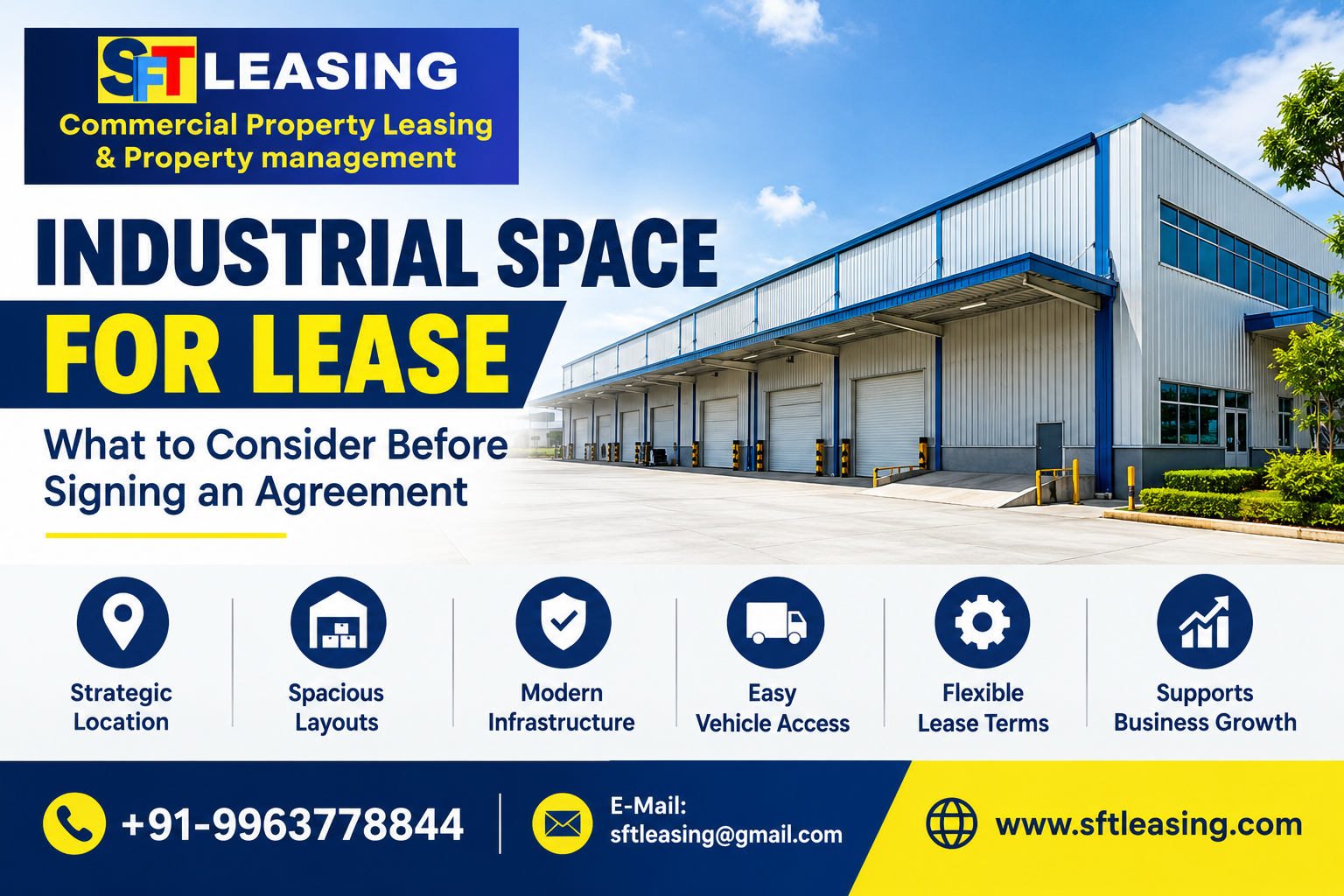
Industrial Space for Lease, What to Consider Before Signing an Agreement
Finding the right industrial space for lease is an important decision for manufacturers, warehouses, logistics companies, distributors, and other businesses. The right property can improve operational efficiency, reduce costs, and support long-term growth. However, signing a lease without carefully reviewing the property and agreement can create unexpected expenses and operational challenges.
Before signing an industrial property lease, businesses should evaluate the location, building specifications, rental costs, permitted use, lease terms, accessibility, infrastructure, and future requirements.
1. Choose the Right Location
Location is one of the most important factors when leasing industrial space.
Consider:
- Proximity to highways and major roads
- Access to ports, railway stations, and airports where relevant
- Distance from suppliers and customers
- Availability of public transportation for employees
- Local industrial infrastructure
- Traffic conditions and vehicle accessibility
A strategically located industrial property can help reduce transportation time and logistics costs.
2. Check the Size and Layout
The available space should match your current operational requirements while allowing room for future expansion.
Evaluate:
- Total built-up area
- Warehouse or production area
- Office space
- Storage requirements
- Loading and unloading areas
- Parking facilities
- Internal movement of goods
- Space for machinery and equipment
Avoid choosing a property based only on its total square footage. The layout and usable space are equally important.
3. Evaluate Building Specifications
Industrial properties can have very different specifications. Before signing, inspect the building carefully.
Important factors include:
- Clear ceiling height
- Floor load capacity
- Column spacing
- Flooring condition
- Roofing condition
- Ventilation
- Natural lighting
- Fire safety systems
- Drainage
- Electrical infrastructure
Make sure the building can safely accommodate your equipment, inventory, and operational activities.
4. Review Loading and Vehicle Access
For manufacturing, logistics, warehousing, and distribution businesses, vehicle access is critical.
Check whether the property can accommodate the types of vehicles your business uses, including trucks and other commercial vehicles.
Look at:
- Loading docks
- Truck entry and exit
- Turning radius
- Internal roads
- Loading/unloading space
- Parking
- Gate dimensions
- Operating-hour restrictions
Poor vehicle access can affect daily operations and increase logistics costs.
5. Understand the Total Leasing Cost
The advertised rent is not always the complete cost of occupying an industrial property.
Before signing, understand all applicable expenses, such as:
- Monthly rent
- Security deposit
- Maintenance charges
- Common-area charges
- Property taxes, where applicable
- Utility costs
- Insurance requirements
- Repairs and maintenance
- Taxes and other applicable charges
Ask for a clear breakdown of the expected monthly and annual occupancy costs.
6. Carefully Review the Lease Term
Industrial leases can involve significant financial commitments, so understand the complete lease structure before signing.
Review:
- Lease duration
- Renewal options
- Rent escalation
- Notice period
- Lock-in period
- Security deposit
- Early termination provisions
- Subleasing or assignment rights
- Expansion options
Make sure the lease term aligns with your business plans.
7. Confirm Permitted Business Use
Not every industrial property is suitable for every type of business.
Before signing, verify that your intended activities are permitted at the property and under applicable local regulations.
Depending on the business, this may involve checking requirements related to:
- Manufacturing
- Warehousing
- Storage
- Logistics
- Hazardous materials
- Machinery
- Noise
- Waste management
- Environmental compliance
Getting this clarification before signing can help prevent costly problems later.
8. Check Utilities and Infrastructure
Reliable utilities are essential for industrial operations.
Verify the availability and capacity of:
- Electricity
- Water
- Drainage
- Internet and telecommunications
- Backup power
- Gas supply, if required
- Fire protection systems
If your business requires high electrical loads or specialized infrastructure, confirm that the property can support those requirements.
9. Inspect the Property Before Signing
Never rely solely on photographs or property listings.
Conduct a physical inspection and, where appropriate, involve technical professionals to evaluate the property.
Look for:
- Structural issues
- Water leakage
- Damaged flooring
- Roof problems
- Electrical concerns
- Drainage issues
- Fire safety deficiencies
- Pest problems
- Access limitations
Document the property’s condition before taking possession.
10. Understand Maintenance Responsibilities
The lease should clearly explain who is responsible for maintaining and repairing different parts of the property.
Clarify responsibility for:
- Structural repairs
- Roof maintenance
- Electrical systems
- Plumbing
- Fire safety equipment
- HVAC systems
- Common areas
- Security systems
- External areas
Clearly defined responsibilities can reduce disputes between the tenant and property owner.
11. Check Compliance and Approvals
Depending on the property and intended use, businesses may need various approvals, licenses, or permissions.
Verify relevant requirements before committing to the lease. These may include building approvals, fire safety requirements, environmental permissions, zoning or land-use requirements, and business-specific licenses.
A commercial real estate professional or qualified legal advisor can help identify issues that require further verification.
12. Negotiate Important Lease Terms
Many aspects of an industrial lease may be negotiable.
Depending on the property and landlord, businesses may discuss:
- Rental rate
- Rent-free period
- Security deposit
- Lease duration
- Escalation terms
- Fit-out period
- Maintenance responsibilities
- Renewal options
- Exit conditions
- Signage permissions
- Expansion rights
Review the complete commercial impact of each clause rather than focusing only on the monthly rent.
13. Plan for Future Business Growth
Your business may need more space in the future. Consider whether the property can support expansion.
Ask:
- Is additional space available nearby?
- Can the existing facility be expanded?
- Is there flexibility to modify the layout?
- Are additional parking or loading facilities possible?
- Does the lease provide expansion or renewal options?
Planning ahead can make your industrial property strategy more flexible.
14. Get Professional Advice Before Signing
An industrial property lease can contain complex financial, operational, and legal provisions. Before signing, consider having the agreement reviewed by appropriate legal, financial, and property professionals.
A commercial real estate consultant can also help businesses compare properties, evaluate locations, understand market conditions, negotiate commercial terms, and identify properties that match operational requirements.
Industrial Space for Lease: Final Checklist
Before signing an industrial lease, make sure you have reviewed:
- Location and accessibility
- Property size and layout
- Building specifications
- Loading and parking facilities
- Rent and additional costs
- Security deposit
- Lease duration
- Rent escalation
- Lock-in and exit clauses
- Permitted business use
- Utilities and infrastructure
- Maintenance responsibilities
- Compliance requirements
- Renewal options
- Expansion possibilities
- Legal documentation
Conclusion
Choosing an industrial space for lease requires more than comparing rental prices. Businesses should evaluate the property from operational, financial, legal, and long-term growth perspectives.
A well-reviewed lease can provide greater clarity about costs, responsibilities, property use, and future options. Taking the time to inspect the property, understand the agreement, verify requirements, and seek professional advice can help businesses make a more informed leasing decision.
Looking for the right industrial space for your business? Professional commercial real estate guidance can help you identify suitable properties and evaluate important leasing considerations before making a commitment.