

Tenant Representation Services, A Complete Guide for Business Occupiers
Finding the right commercial property is an important decision for any business. Whether a company is looking for office space, a retail outlet, a warehouse, or an industrial facility, the right location can significantly influence operational efficiency, customer accessibility, employee satisfaction, and long-term business growth. Tenant representation services help businesses identify suitable properties, negotiate favorable lease terms, and make informed real estate decisions. By understanding the specific requirements of business occupiers, tenant representatives simplify the property search process and help companies find spaces that align with their operational needs and financial goals.
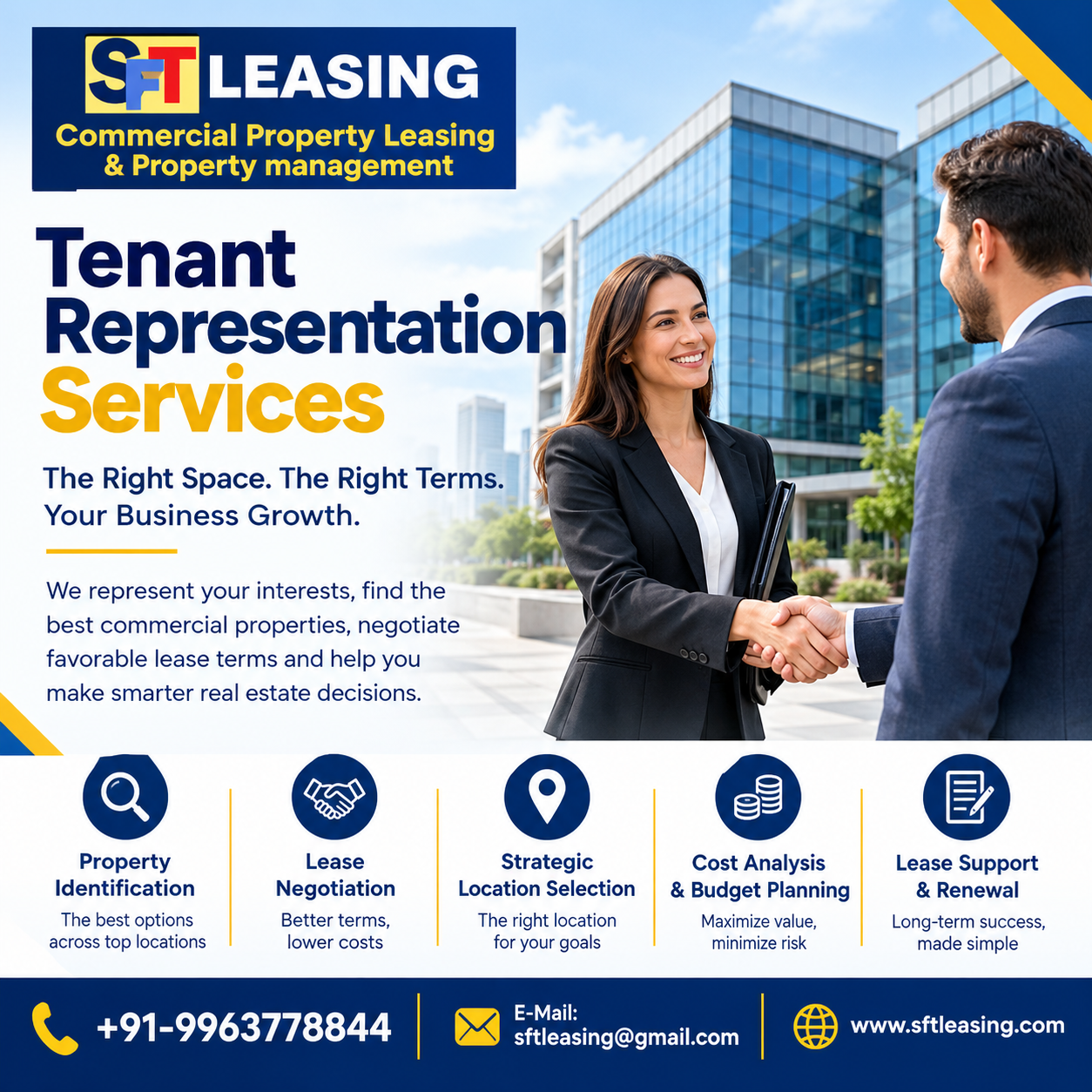
What Are Tenant Representation Services?
Tenant representation services involve professional real estate assistance provided exclusively to tenants or business occupiers during the commercial property leasing process. Unlike landlord representatives, who focus on leasing properties for owners, tenant representatives work to protect the interests of businesses searching for commercial space. Their services typically include market research, property identification, rental analysis, lease negotiation, site evaluation, and lease renewal support. By understanding market conditions and available opportunities, tenant representatives help businesses compare properties, evaluate costs, and select locations that support their long-term objectives.
Why Do Businesses Need Tenant Representation?
Leasing commercial property involves more than finding an attractive building or negotiating a rental price. Businesses must consider location, accessibility, infrastructure, operating expenses, lease flexibility, and future expansion requirements. Tenant representation professionals help occupiers evaluate these factors before making a commitment. They also provide insights into local rental trends, property availability, and market conditions, allowing businesses to make decisions based on reliable information rather than assumptions.
Key Benefits of Tenant Representation Services
1. Access to Better Property Opportunities
Tenant representatives help businesses explore suitable commercial properties across different locations and price ranges. Their market knowledge can reveal opportunities that may not be immediately apparent through standard property listings.
2. Professional Lease Negotiation
Commercial lease agreements often contain complex terms related to rent escalation, security deposits, maintenance responsibilities, renewal options, lock-in periods, and termination clauses. Tenant representatives help negotiate commercially reasonable terms that align with the occupier’s requirements.
3. Cost Savings and Budget Management
A property’s total occupancy cost includes more than its base rent. Maintenance charges, utilities, parking, fit-out expenses, taxes where applicable, and other operating costs can significantly affect the overall budget. Tenant representation services help businesses assess these expenses and compare the financial implications of different properties.
4. Strategic Location Selection
Location plays a major role in business performance. Retailers may prioritize customer footfall and visibility, while office occupiers may focus on employee accessibility and transport connections. Warehousing and industrial businesses may require proximity to highways, suppliers, and distribution networks. Tenant representatives evaluate these priorities to identify appropriate locations.
5. Reduced Time and Complexity
Searching for properties, arranging inspections, comparing offers, and reviewing lease terms can consume valuable management time. Professional representation streamlines these activities, allowing business owners and decision-makers to concentrate on their core operations.
The Tenant Representation Process
A structured tenant representation process helps businesses move from initial planning to successful occupancy.
Step 1: Understanding Business Requirements
The process begins by identifying the business’s space requirements, preferred locations, budget, operational needs, timeline, and expected future growth. This information creates a clear property search strategy.
Step 2: Market Research and Property Shortlisting
The tenant representative studies the local commercial real estate market, evaluates available properties, and develops a shortlist based on the occupier’s priorities.
Step 3: Property Inspections and Evaluation
Shortlisted properties are assessed for accessibility, visibility, infrastructure, building condition, parking, layout, compliance considerations, and suitability for business operations.
Step 4: Financial Analysis and Lease Negotiation
The representative compares rental rates and total occupancy costs, then helps negotiate lease terms such as rent-free periods, escalation clauses, fit-out contributions, renewal rights, and other relevant conditions.
Step 5: Lease Review and Documentation
Before signing, the business should have the lease reviewed by qualified legal and financial professionals as appropriate. The tenant representative coordinates with the relevant parties to help ensure that the agreed commercial terms are accurately reflected in the documentation.
Step 6: Move-In and Occupancy Planning
After the agreement is finalized, the tenant representative may assist with handover coordination, fit-out planning, and occupancy timelines, depending on the scope of the engagement.
Important Factors Business Occupiers Should Consider
Before leasing a commercial property, businesses should evaluate several important factors:
- Location and accessibility: Consider customer reach, employee commuting, public transport, road connectivity, and supplier access.
- Total occupancy cost: Review rent, maintenance charges, deposits, utilities, taxes where applicable, and fit-out expenses.
- Lease flexibility: Understand the lock-in period, termination conditions, renewal rights, and rent escalation schedule.
- Space suitability: Ensure that the property supports current operations and anticipated future growth.
- Infrastructure and amenities: Assess power supply, internet connectivity, parking, security, loading facilities, and other operational requirements.
- Legal and regulatory requirements: Verify applicable permissions, permitted property use, building compliance, and other relevant obligations before committing.
Tenant Representation for Different Business Types
Tenant representation services can support a wide range of commercial occupiers. Retail businesses benefit from assistance with customer demographics, visibility, footfall, and store expansion opportunities. Corporate offices require suitable workspaces with convenient access, appropriate layouts, and employee-friendly amenities. Warehousing and industrial occupiers may prioritize logistics connectivity, loading infrastructure, storage capacity, and operational compliance. Startups and growing companies may need flexible lease structures that allow them to expand or relocate as their requirements change.
How to Choose the Right Tenant Representation Partner
Businesses should select a tenant representation partner with relevant commercial real estate experience, strong local market knowledge, transparent communication, and effective negotiation skills. It is important to understand the scope of services, fee structure, potential conflicts of interest, and whether the representative is committed to acting in the tenant’s interests. Ask about previous assignments involving similar property types, locations, and business requirements. Clear communication and a structured evaluation process can make the entire leasing experience more efficient.
Conclusion
Tenant representation services provide valuable support to businesses seeking commercial properties that meet their operational requirements and financial objectives. From market research and location analysis to lease negotiation and occupancy planning, professional representation helps business occupiers navigate the complexities of commercial real estate with greater confidence. By evaluating the full cost of occupancy, negotiating appropriate lease terms, and selecting locations that support future growth, businesses can make more strategic property decisions.
Partnering with an experienced tenant representation professional can help your business secure the right commercial space, manage leasing risks, and build a strong foundation for long-term success.