

Lease Management, Best Practices for Managing Commercial Properties
Managing a commercial property involves much more than collecting rent. Effective lease management helps property owners, landlords, tenants, and businesses maintain strong financial performance, reduce risks, and build long-term professional relationships.
From tracking lease agreements and renewal dates to managing rent escalations and documentation, a structured lease management process can make commercial property operations more efficient and transparent.
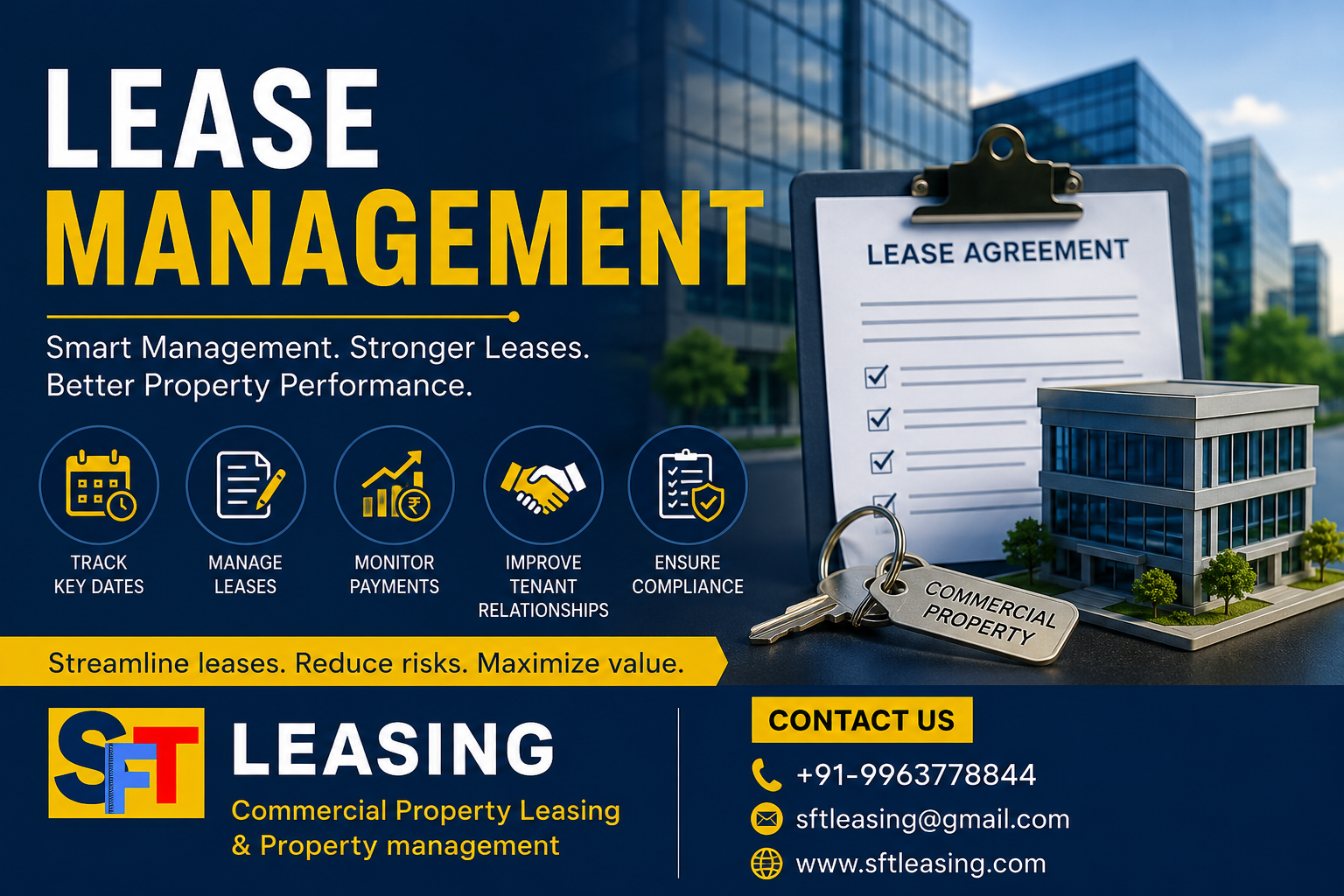
What Is Lease Management?
Lease management is the process of managing every stage of a commercial lease—from negotiation and documentation to rent collection, renewals, compliance, and lease closure.
For commercial property owners, proper lease management helps ensure that properties remain financially productive while minimizing disputes, missed deadlines, and administrative issues.
Why Is Lease Management Important?
A well-managed lease provides clarity for both landlords and tenants. It helps:
- Ensure timely rent collection
- Track lease terms and important dates
- Manage security deposits and rent escalations
- Reduce misunderstandings and disputes
- Improve tenant relationships
- Monitor lease compliance
- Plan renewals and vacancies in advance
- Maintain accurate property records
- Improve overall property profitability
Best Practices for Commercial Lease Management
1. Maintain Proper Lease Documentation
Every commercial lease should clearly document important terms and conditions, including:
- Monthly or annual rent
- Security deposit
- Lease duration
- Rent escalation clauses
- Lock-in period
- Notice period
- Maintenance responsibilities
- Permitted use of premises
- Renewal conditions
- Termination clauses
Keeping all documents organized and accessible can significantly reduce future confusion.
2. Track Critical Lease Dates
Commercial leases often contain several important dates. Missing one could create financial or legal complications.
Maintain a calendar or lease management system for:
- Lease commencement date
- Expiry date
- Rent escalation dates
- Renewal deadlines
- Notice periods
- Lock-in period completion
- Security deposit adjustments
Advance reminders allow property owners and tenants to make decisions without unnecessary pressure.
3. Monitor Rent and Escalations
Rent collection should be systematic and transparent. Property owners should monitor:
- Rent due dates
- Outstanding payments
- Escalation schedules
- Taxes and other applicable charges
- Maintenance or common-area expenses
A clear payment tracking system helps maintain consistent cash flow and reduces payment-related disputes.
4. Start Renewal Discussions Early
Waiting until the final month of a lease can create unnecessary pressure.
Begin renewal discussions well in advance to evaluate:
- Current market rental values
- Tenant performance
- Property demand
- Required rent revisions
- Future space requirements
- Renewal terms and conditions
Early planning also gives landlords sufficient time to market the property if the tenant decides not to renew.
5. Maintain Strong Tenant Communication
Good communication is an essential part of successful lease management.
Regular communication can help address issues related to:
- Repairs and maintenance
- Rent payments
- Lease changes
- Property usage
- Renewal discussions
- Operational concerns
A professional and responsive approach can improve tenant satisfaction and encourage longer-term occupancy.
6. Ensure Lease Compliance
Both landlords and tenants have responsibilities under a commercial lease.
Regularly review whether the agreed terms are being followed, particularly regarding:
- Permitted business activities
- Property alterations
- Maintenance obligations
- Subleasing or assignment
- Insurance requirements
- Safety and statutory requirements
- Payment obligations
Any significant changes should be properly documented.
7. Keep Property and Maintenance Records
Lease management should work together with property management.
Maintain records of:
- Maintenance requests
- Repairs
- Service contracts
- Utility responsibilities
- Property inspections
- Renovations and improvements
- Tenant complaints and resolutions
This creates a reliable history of the property’s condition and helps with future decision-making.
8. Use Technology for Better Lease Management
Manual spreadsheets and paperwork can become difficult to manage as the number of properties and tenants increases.
Digital lease management systems can help track:
- Lease agreements
- Payment schedules
- Expiry dates
- Renewals
- Documents
- Tenant information
- Notifications and reminders
Technology can improve accuracy, save time, and provide better visibility into the property portfolio.
Common Lease Management Challenges
Commercial property owners may face several challenges, such as:
- Missed renewal deadlines
- Delayed rent payments
- Poor documentation
- Unclear lease clauses
- Unexpected vacancies
- Disagreements over maintenance
- Inadequate tracking of escalations
- Changes in tenant business requirements
A proactive lease management strategy can help minimize these challenges.
Benefits of Professional Lease Management
For property owners with multiple commercial properties, professional lease management support can provide significant value.
A professional approach can help with:
Lease Documentation: Organizing and maintaining essential agreements and records.
Rent & Escalation Tracking: Monitoring payments and scheduled increases.
Renewal Management: Initiating discussions before lease expiry.
Tenant Coordination: Maintaining smooth communication between property owners and occupants.
Property Marketing: Supporting the leasing process when vacancies arise.
Negotiation Support: Helping structure commercially practical lease terms.
Conclusion
Lease management is a critical component of successful commercial property management. A well-organized approach helps property owners protect their investment, maintain predictable income, reduce risks, and develop stronger tenant relationships.
Whether managing a single commercial property or a larger portfolio, focusing on documentation, timely communication, rent tracking, compliance, renewals, and proactive planning can make the entire leasing process more efficient.
Smart lease management today can lead to better property performance tomorrow.