

Industrial Space for Lease, How to Evaluate a Property Before Renting
Finding the right industrial space for lease is an important decision for manufacturers, warehouses, logistics companies, distributors, and other industrial businesses. The right property can improve operational efficiency, reduce transportation costs, support business growth, and provide a better working environment.
However, choosing an industrial property involves more than comparing rental prices. Businesses should carefully evaluate the location, building specifications, accessibility, infrastructure, utilities, lease terms, safety, and future expansion possibilities before signing a rental agreement.
This guide explains the key factors businesses should consider when evaluating an industrial space for lease.
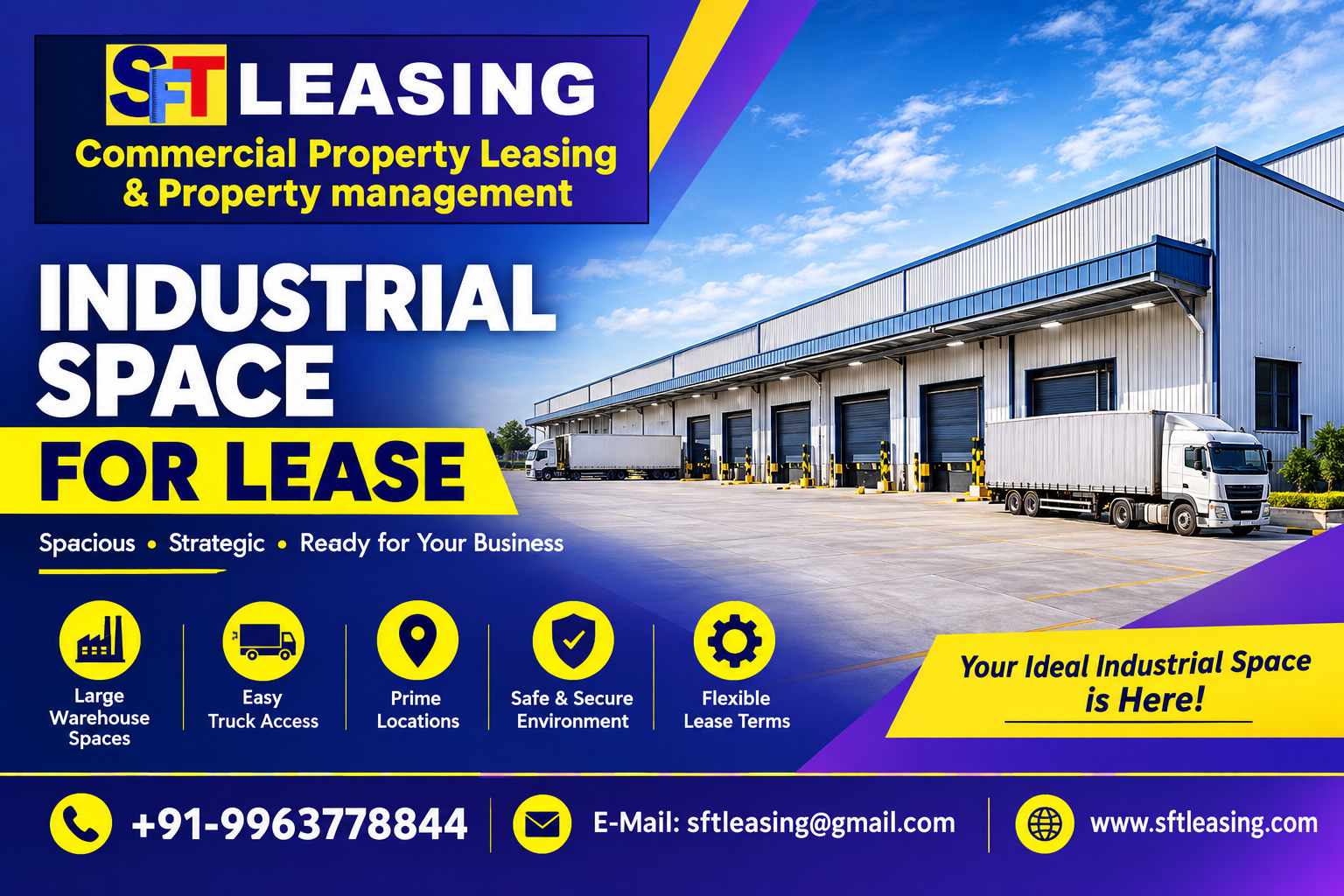
1. Evaluate the Location
Location is one of the most important factors when selecting an industrial property.
Consider the property’s proximity to:
- Major highways and transportation routes
- Ports, airports, and railway facilities
- Suppliers and distribution centers
- Customers and major markets
- Labor and residential areas
- Banks, service providers, and other business facilities
A well-connected location can reduce transportation time and logistics expenses while improving supply-chain efficiency.
2. Check the Property Size and Layout
The industrial space should provide sufficient room for your current operations as well as potential future growth.
Evaluate:
- Total built-up area
- Usable floor space
- Ceiling height
- Storage capacity
- Production areas
- Office and administrative space
- Loading and unloading areas
- Parking facilities
- Open yard space
The layout should support the movement of raw materials, equipment, employees, vehicles, and finished products efficiently.
3. Inspect Building Quality and Condition
Before renting, conduct a thorough inspection of the building.
Check the condition of:
- Roof and walls
- Flooring
- Doors and shutters
- Structural components
- Drainage systems
- Electrical systems
- Plumbing
- Ventilation
- Fire-safety equipment
Any major repair requirements should be identified before finalizing the lease. Businesses should also clarify which maintenance responsibilities belong to the landlord and which belong to the tenant.
4. Examine Loading and Vehicle Access
For warehouses, manufacturing units, and logistics operations, vehicle accessibility is critical.
Check whether the property can accommodate the types of vehicles your business uses, including trucks and other commercial vehicles.
Look at:
- Entry and exit points
- Road width
- Loading docks
- Truck turning space
- Loading and unloading areas
- Parking availability
- Internal vehicle circulation
Poor vehicle access can create delays and increase operating costs.
5. Review Power and Utility Availability
Industrial businesses often require reliable utilities to operate efficiently.
Before renting, confirm the availability and capacity of:
- Electricity
- Water supply
- Drainage
- Internet connectivity
- Backup power
- Gas or other specialized utilities, if required
If your business uses heavy machinery, verify that the electrical infrastructure can support the required load.
6. Check Zoning and Permitted Use
Make sure the property is legally suitable for your intended business activity.
Confirm:
- Permitted industrial use
- Local zoning requirements
- Building approvals
- Required licenses
- Environmental regulations
- Fire and safety requirements
- Industry-specific permissions
Using a property for an activity that is not permitted can create serious legal and operational problems.
7. Consider Safety and Security
Industrial properties should provide a safe environment for employees, equipment, inventory, and visitors.
Evaluate:
- Fire alarms and fire-fighting systems
- Emergency exits
- Security personnel
- CCTV availability
- Boundary walls or fencing
- Lighting
- Access-control systems
- Emergency vehicle access
If additional safety or security measures are required, discuss them with the property owner before signing the agreement.
8. Understand the Total Rental Cost
Don’t evaluate an industrial property based only on the advertised monthly rent.
Calculate the complete occupancy cost, including:
- Monthly rent
- Security deposit
- Maintenance charges
- Property-related charges
- Utility expenses
- Common-area charges
- Taxes, where applicable
- Parking or additional space charges
- Repairs and modifications
Understanding the total cost will help you compare different industrial spaces more accurately.
9. Review the Lease Agreement Carefully
The lease agreement should clearly define the rights and responsibilities of both the landlord and tenant.
Pay attention to:
- Lease duration
- Rent and escalation clauses
- Security deposit
- Renewal terms
- Lock-in period
- Notice period
- Maintenance responsibilities
- Repair obligations
- Permitted use
- Subleasing provisions
- Termination conditions
- Insurance requirements
For complex industrial leases, businesses may benefit from professional legal and commercial real estate advice before signing.
10. Evaluate Future Expansion Potential
Your business may grow during the lease period. Therefore, consider whether the property can accommodate future requirements.
Ask:
- Is additional space available nearby?
- Can the existing facility be expanded?
- Is there additional land or yard space?
- Can additional equipment be installed?
- Does the lease provide flexibility for expansion?
Choosing a property with expansion potential can reduce the need for relocation as your business grows.
11. Consider Workforce Accessibility
A property may have excellent logistics connectivity but still create challenges if employees cannot easily reach it.
Consider:
- Availability of public transportation
- Distance from residential areas
- Road connectivity
- Employee parking
- Nearby amenities
- Shift-work accessibility
A location that is convenient for employees can support recruitment, retention, and operational continuity.
12. Inspect the Property Before Signing
Never finalize an industrial space based only on photographs or online listings.
Visit the property personally and inspect it during different times if possible.
During the inspection, evaluate:
- Traffic conditions
- Noise levels
- Drainage
- Surrounding businesses
- Neighborhood conditions
- Vehicle movement
- Utility reliability
- Building condition
- Security arrangements
Taking photographs and preparing an inspection checklist can help you compare multiple properties objectively.
13. Compare Multiple Industrial Properties
Before making a final decision, compare several available properties.
Create a comparison based on:
| Factor | Property A | Property B | Property C |
|---|---|---|---|
| Location | |||
| Monthly Rent | |||
| Property Size | |||
| Road Access | |||
| Power Availability | |||
| Loading Facilities | |||
| Parking | |||
| Security | |||
| Lease Terms | |||
| Expansion Potential |
This approach helps businesses identify the property that fits their operational and financial requirements.
Benefits of Choosing the Right Industrial Space
A carefully selected industrial property can provide several long-term benefits:
- Better logistics efficiency
- Lower transportation costs
- Improved workflow
- Better employee accessibility
- Increased storage capacity
- Improved customer service
- Reduced operational disruptions
- Greater flexibility for business growth
Common Mistakes to Avoid
Businesses should avoid making decisions based solely on low rent. Some common mistakes include:
- Ignoring transportation access
- Underestimating required floor space
- Not checking electrical capacity
- Overlooking loading facilities
- Failing to inspect the building
- Ignoring zoning requirements
- Not understanding maintenance responsibilities
- Accepting unclear lease clauses
- Forgetting future expansion needs
Conclusion
Choosing the right industrial space for lease requires careful evaluation of both the property and the lease agreement. Location, accessibility, building condition, utilities, loading facilities, safety, total costs, and expansion potential should all be considered before making a decision.
A professional industrial property consultant or commercial real estate advisor can help businesses identify suitable properties, evaluate lease terms, compare available options, and negotiate with property owners.
Taking the time to evaluate an industrial property properly can help businesses secure a facility that supports efficient operations today while providing flexibility for future growth.
Frequently Asked Questions
What should I check before leasing an industrial property?
Check the location, property size, building condition, road access, loading facilities, utilities, zoning, safety, total costs, lease terms, and expansion possibilities.
How important is location for an industrial space?
Location can significantly affect transportation costs, delivery times, employee accessibility, and overall logistics efficiency.
Should I inspect an industrial property before signing the lease?
Yes. A physical inspection can help identify structural, utility, access, safety, and maintenance issues that may not be visible in property listings.
What should an industrial lease agreement include?
It should clearly cover rent, deposit, lease duration, escalation, renewal, maintenance, permitted use, termination, notice periods, and other responsibilities of the landlord and tenant.
Why use an industrial property consultant?
A consultant can help businesses identify suitable properties, compare options, understand commercial terms, and navigate the leasing process more efficiently.
If you want, I can also create a matching HD blog-post image titled “Industrial Space for Lease” with your logo and contact details.