
Absolutely — here is a comprehensive, SEO-friendly blog draft designed for a business/real-estate website.
Commercial Property Leasing: A Complete Guide for Businesses
Finding the right commercial property is one of the most important decisions a business can make. Whether you are launching a new business, expanding to another location, opening a retail store, setting up an office, or establishing a warehouse, the right commercial property can directly influence your operations, customer reach, employee experience, and long-term growth.
Commercial property leasing allows businesses to occupy a suitable property without the large upfront investment associated with purchasing real estate. However, leasing commercial space involves more than simply finding a property and signing an agreement. Businesses need to carefully evaluate the location, rental costs, lease terms, property condition, legal requirements, and future business needs.
This complete guide explains the key aspects of commercial property leasing and provides practical insights to help businesses make informed leasing decisions.
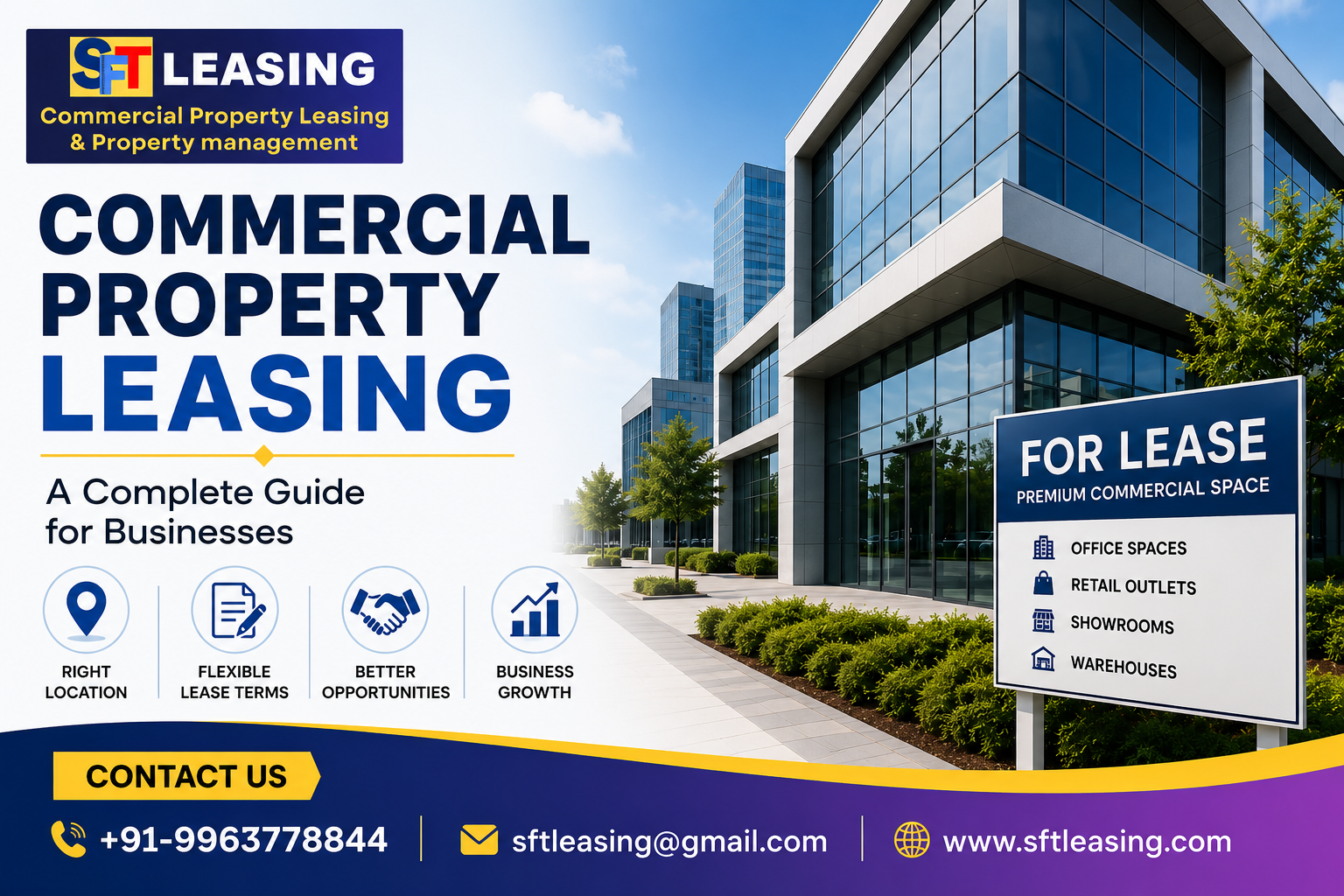
What Is Commercial Property Leasing?
Commercial property leasing is an arrangement in which a property owner or landlord gives a business the right to use a commercial property for a specified period in exchange for rent.
Commercial properties can include:
- Office spaces
- Retail stores
- Shopping mall units
- Showrooms
- High-street properties
- Warehouses
- Industrial facilities
- Restaurants and food outlets
- Business centers
- Corporate offices
- Medical and professional spaces
- Franchise locations
The lease agreement generally defines the rental amount, lease period, security deposit, maintenance responsibilities, permitted use, renewal conditions, and other terms agreed upon by the landlord and tenant.
Why Businesses Choose to Lease Commercial Property
Leasing can offer businesses greater flexibility compared with purchasing commercial real estate.
1. Lower Initial Investment
Buying commercial property requires significant capital. Leasing generally requires a security deposit, advance rent, and other setup costs rather than the full purchase price.
This allows businesses to allocate more capital toward:
- Business operations
- Marketing
- Staffing
- Inventory
- Equipment
- Technology
- Expansion
2. Greater Location Flexibility
Businesses can lease properties in prime commercial locations without having to purchase expensive real estate.
A strategic location can help improve:
- Customer visibility
- Accessibility
- Brand exposure
- Employee convenience
- Sales opportunities
3. Easier Business Expansion
A well-structured lease can make it easier for growing businesses to relocate, expand, or take additional space when required.
4. Access to Suitable Facilities
Many commercial properties are already designed for business use and may provide facilities such as parking, security, elevators, power backup, common areas, loading areas, or building management services.
Types of Commercial Properties Businesses Can Lease
Different businesses require different types of commercial spaces.
Office Space Leasing
Office spaces are suitable for companies, startups, professional firms, consultants, technology businesses, and corporate operations.
Businesses should consider:
- Location
- Floor area
- Number of employees
- Meeting rooms
- Parking
- Internet connectivity
- Power backup
- Building amenities
- Future expansion requirements
Retail Space Leasing
Retail leasing is particularly dependent on customer visibility and accessibility.
Important factors include:
- Foot traffic
- Frontage
- Visibility
- Parking
- Nearby businesses
- Customer demographics
- Accessibility
- Store layout
- Signage opportunities
Showroom Leasing
Showrooms are commonly used by automobile dealers, furniture companies, electronics brands, lifestyle businesses, and other businesses that need product display space.
A showroom should provide sufficient visibility, parking, display area, and convenient customer access.
Industrial and Warehouse Leasing
Warehouses and industrial properties are generally selected based on operational requirements rather than customer visibility.
Important considerations include:
- Loading and unloading facilities
- Storage capacity
- Ceiling height
- Truck access
- Road connectivity
- Power availability
- Fire and safety systems
- Security
- Proximity to suppliers and customers
Shopping Mall Leasing
Shopping mall leasing can provide businesses with access to established customer traffic and complementary retailers.
However, mall leases can involve additional costs and detailed operational requirements. Businesses should carefully understand common-area charges, marketing contributions, operating hours, fit-out requirements, and other obligations before signing.
How to Choose the Right Commercial Property
Choosing a commercial property should begin with your business requirements rather than simply looking at available properties.
Step 1: Define Your Business Requirements
Determine:
- Required space
- Preferred location
- Budget
- Number of employees
- Customer requirements
- Parking needs
- Storage requirements
- Power requirements
- Accessibility requirements
- Expansion plans
Having a clear requirement helps narrow the search and saves time.
Step 2: Select the Right Location
Location is often one of the most important factors in commercial real estate.
Evaluate:
- Customer accessibility
- Public transportation
- Road connectivity
- Parking availability
- Nearby competitors
- Nearby complementary businesses
- Local demographics
- Future development
- Visibility
- Safety and convenience
For retail businesses, foot traffic and visibility can be particularly important. For warehouses, logistics connectivity may be more important than pedestrian traffic.
Step 3: Establish a Realistic Budget
Businesses should calculate the total occupancy cost, not just the advertised monthly rent.
Potential expenses may include:
- Monthly rent
- Security deposit
- Maintenance charges
- Common-area maintenance charges
- Utilities
- Property taxes, where contractually applicable
- Insurance
- Parking charges
- Fit-out expenses
- Signage costs
- Brokerage fees
- Registration or documentation costs
- Taxes and other applicable charges
Understanding the complete cost structure prevents unexpected expenses.
Understanding Commercial Lease Terms
Before signing a commercial lease, businesses should carefully review the major terms.
Lease Term
The lease term defines how long the tenant can occupy the property.
Commercial leases may be structured for several years depending on the property, business, and agreement between the parties.
Rent
The agreement should clearly specify:
- Base rent
- Payment frequency
- Due date
- Applicable taxes
- Rent escalation
- Late-payment consequences
Security Deposit
Landlords commonly require a security deposit. The lease should clearly state the amount, conditions for adjustment, and terms for refunding the deposit.
Rent Escalation
Some commercial leases include periodic rent increases.
Businesses should understand:
- When the increase applies
- The percentage or calculation method
- Whether the increase is fixed or market-linked
- How it affects the total lease cost
Lock-In Period
A lock-in period may restrict either party from terminating the lease during a specified period, subject to the terms of the agreement.
Businesses should understand the financial implications before accepting a lock-in clause.
Notice Period
The notice period determines how much advance notice must be provided before terminating the lease.
Renewal Option
Businesses planning long-term operations should consider whether the lease provides a renewal option and how renewal rent will be determined.
What Is a Commercial Lease Agreement?
A commercial lease agreement is a legally binding document that establishes the rights and responsibilities of the landlord and tenant.
A typical commercial lease may cover:
- Property description
- Lease term
- Rent
- Security deposit
- Rent escalation
- Maintenance responsibilities
- Utilities
- Permitted use
- Subleasing
- Assignment
- Repairs
- Alterations
- Insurance
- Termination
- Lock-in period
- Notice period
- Renewal
- Default and remedies
- Dispute resolution
Businesses should carefully review the agreement and obtain appropriate professional or legal advice before signing.
Due Diligence Before Leasing a Commercial Property
Due diligence can help businesses avoid costly problems later.
Verify Property Documents
Where appropriate, businesses should verify ownership and relevant property documentation through qualified professionals.
Check Permitted Usage
Make sure the property can legally be used for your intended business activity.
For example, a property suitable for an office may not automatically be suitable for manufacturing, food service, warehousing, or other specialized activities.
Inspect the Physical Condition
Check:
- Electrical systems
- Plumbing
- HVAC
- Flooring
- Walls and ceilings
- Fire safety systems
- Elevators
- Restrooms
- Parking
- Water supply
- Power backup
- Security systems
Document existing defects before taking possession.
Understand Building Rules
Commercial buildings may have rules relating to:
- Operating hours
- Signage
- Renovations
- Noise
- Parking
- Deliveries
- Security
- Customer access
- Common areas
These rules should be understood before signing the lease.
Negotiating a Commercial Property Lease
Commercial lease terms are often negotiable.
Businesses may negotiate:
- Monthly rent
- Security deposit
- Rent-free period
- Fit-out period
- Lock-in period
- Lease duration
- Rent escalation
- Maintenance charges
- Parking
- Signage rights
- Renewal terms
- Termination conditions
- Repair responsibilities
A strong negotiation should focus on the overall economics and flexibility of the lease, rather than only the monthly rent.
Common Mistakes Businesses Should Avoid
Choosing a Property Only Because of Low Rent
A low-rent property may not necessarily be cost-effective if it has poor visibility, accessibility, infrastructure, or customer traffic.
Ignoring Additional Charges
Always calculate the total occupancy cost.
Not Reading the Lease Carefully
Small clauses can have significant financial consequences.
Failing to Plan for Business Growth
A property that works today may become inadequate as the business expands.
Overlooking Exit Conditions
Understand termination, lock-in, notice, and renewal provisions before signing.
Not Checking Permitted Use
Ensure that the property is suitable for the specific business activity.
Neglecting Infrastructure
Power, parking, internet connectivity, loading access, water supply, and other infrastructure can directly affect operations.
Commercial Property Leasing Checklist
Before finalizing a property, businesses can use the following checklist:
Property
- Location meets business requirements
- Appropriate size
- Suitable layout
- Good accessibility
- Adequate parking
- Required infrastructure available
- Property condition inspected
Financial
- Rent confirmed
- Security deposit confirmed
- Maintenance charges understood
- Rent escalation understood
- Taxes and other charges identified
- Fit-out costs estimated
Legal & Contractual
- Ownership and property documents reviewed
- Permitted use confirmed
- Lease term reviewed
- Lock-in period understood
- Notice period confirmed
- Renewal terms reviewed
- Termination conditions understood
- Responsibilities of landlord and tenant clearly defined
The Importance of Professional Assistance
Commercial leasing involves financial, operational, and contractual considerations. Businesses can benefit from working with experienced commercial real estate professionals who understand the local market and leasing process.
A professional can help businesses:
- Identify suitable properties
- Compare locations
- Evaluate rental values
- Shortlist properties
- Coordinate property visits
- Understand lease structures
- Negotiate commercial terms
- Identify potential issues
- Coordinate with legal and other professional advisors
Professional assistance can make the leasing process more efficient and help businesses make better-informed decisions.
Final Thoughts
Commercial property leasing is an important strategic decision for any business. The right property can support growth, improve customer access, strengthen brand visibility, and create an efficient working environment. On the other hand, an unsuitable property or poorly negotiated lease can create unnecessary costs and operational challenges.
Businesses should therefore evaluate more than just rent. Location, property suitability, infrastructure, total occupancy cost, lease terms, flexibility, legal considerations, and future business requirements should all be carefully considered.
By conducting proper research, due diligence, financial planning, and lease negotiation, businesses can select a commercial property that supports their current operations and long-term growth.
Frequently Asked Questions About Commercial Property Leasing
1. What is commercial property leasing?
Commercial property leasing is an agreement that allows a business to occupy and use a commercial property for a specified period in exchange for rent.
2. What types of commercial properties can businesses lease?
Businesses can lease offices, retail stores, showrooms, warehouses, industrial facilities, restaurants, shopping mall units, and other commercial spaces.
3. What should I consider before leasing a commercial property?
Key factors include location, rent, total occupancy costs, property condition, accessibility, parking, permitted use, lease terms, infrastructure, and future expansion needs.
4. What is a lock-in period in a commercial lease?
A lock-in period is a specified period during which the lease may restrict termination, subject to the terms and conditions of the agreement.
5. Can commercial lease terms be negotiated?
Yes. Depending on the property and landlord, businesses may negotiate rent, security deposit, escalation, fit-out period, lock-in period, renewal, maintenance, and other commercial terms.
6. Should I consult a professional before signing a commercial lease?
Yes. Depending on the transaction, businesses may benefit from advice from commercial real estate professionals, lawyers, accountants, and other qualified advisors.
Conclusion
Leasing the right commercial property is not simply about finding a space—it is about finding a space that fits your business strategy, budget, customers, employees, and future growth plans.
With proper planning and due diligence, businesses can turn commercial property leasing into a valuable part of their overall growth strategy.
If you want, I can also turn this into an SEO-optimized version with a meta title, meta description, focus keyword, secondary keywords, URL slug, FAQs, and internal-link suggestions for your website.