

Absolutely. Here is a professional, SEO-friendly blog post suitable for a commercial real estate website.
Lease Negotiation, How Businesses Can Secure Better Commercial Lease Terms
Finding the right commercial property is only the first step in establishing a successful business location. The next—and often equally important—step is negotiating the right lease terms.
A well-negotiated commercial lease can help businesses control occupancy costs, maintain flexibility, reduce financial risks, and create better long-term stability. Whether you are leasing an office, retail outlet, warehouse, showroom, or other commercial space, understanding the key elements of lease negotiation can make a significant difference.
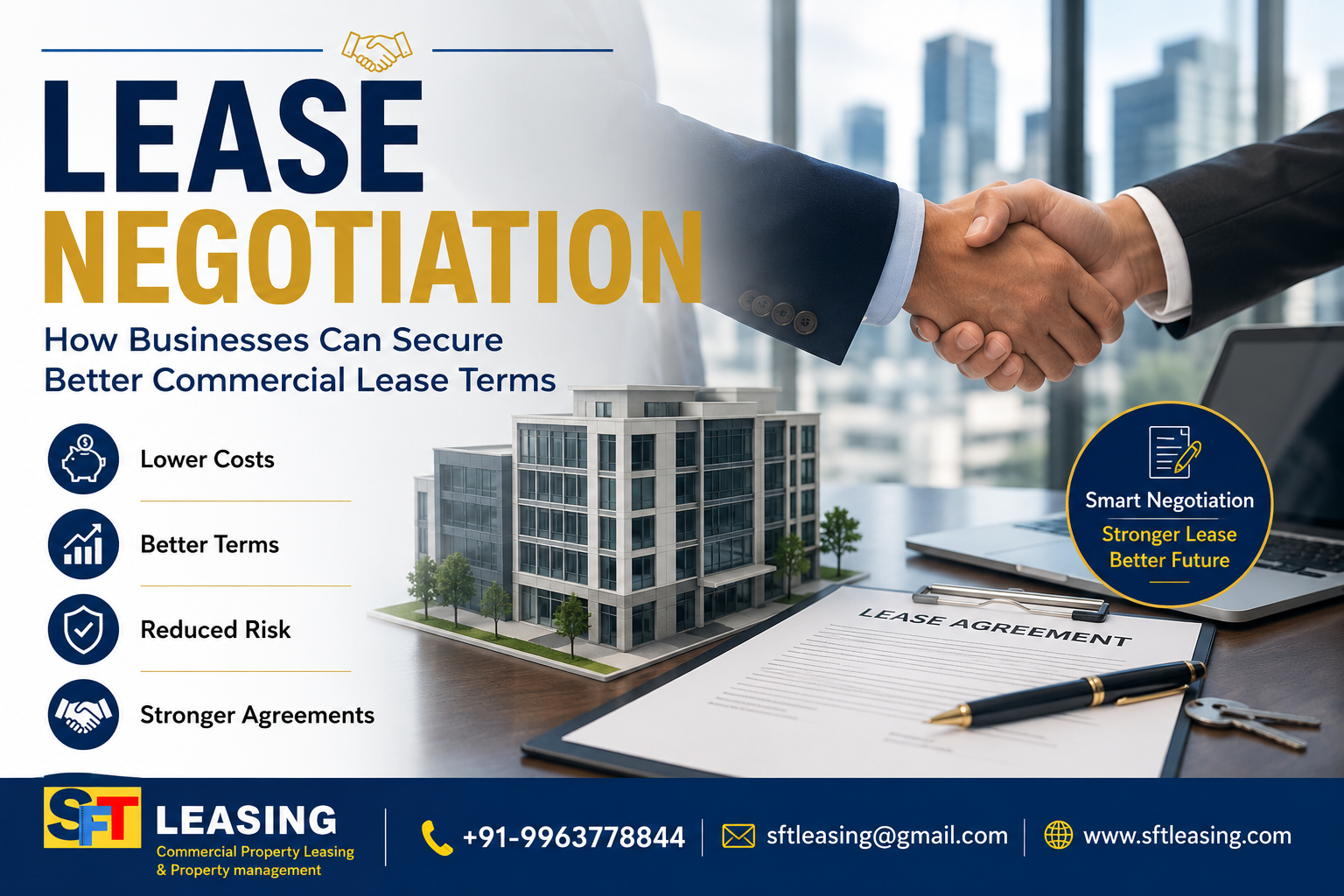
What Is Commercial Lease Negotiation?
Commercial lease negotiation is the process through which a landlord and tenant agree on the terms and conditions of a commercial property lease.
While rent is an important consideration, a commercial lease includes much more than the monthly rental amount. Businesses should carefully evaluate factors such as:
- Monthly rent and escalation
- Security deposit
- Lease tenure
- Lock-in period
- Notice period
- Rent-free or fit-out period
- Maintenance and operating expenses
- Parking provisions
- Property taxes and other charges
- Renewal and exit conditions
- Permitted business activities
- Repairs and maintenance responsibilities
A good negotiation aims to create a lease structure that works for both the property owner and the business.
Why Lease Negotiation Matters for Businesses
Commercial property expenses can represent a substantial portion of a company’s operating costs. Even a small improvement in lease terms can result in significant savings over several years.
Effective negotiation can help businesses:
Reduce overall occupancy costs:
Negotiating rent, escalation clauses, maintenance charges, and other expenses can improve financial efficiency.
Improve business flexibility:
Favorable renewal, exit, and expansion provisions can help businesses adapt as their requirements change.
Reduce financial risk:
Clearly defined responsibilities and transparent charges can prevent unexpected expenses.
Secure better operational conditions:
Negotiating parking, signage, fit-out permissions, access hours, and other requirements can make the premises more suitable for business operations.
Key Commercial Lease Terms to Negotiate
1. Monthly Rent
Rent is usually the most obvious negotiation point. Businesses should research comparable properties in the same location before accepting the landlord’s initial proposal.
Consider:
- Location and accessibility
- Property quality
- Building amenities
- Market rental levels
- Available alternatives
- Lease tenure
Instead of focusing only on the quoted monthly rent, evaluate the total cost of occupancy over the entire lease period.
2. Rent Escalation
Many commercial leases include periodic rent increases. Businesses should understand how frequently the rent will increase and by how much.
A predictable and commercially reasonable escalation structure can make long-term budgeting easier.
3. Security Deposit
The security deposit can have a significant impact on the initial capital required to occupy the premises.
Businesses can negotiate:
- Deposit amount
- Payment structure
- Conditions for adjustment
- Refund timeline after lease termination
Clearly documenting the terms for returning the deposit can help avoid disputes later.
4. Lock-In Period
A lock-in period restricts the tenant from exiting the lease for a specified period.
Businesses should carefully consider whether the proposed lock-in period matches their expected business plans. Start-ups, growing companies, and businesses entering new markets may particularly benefit from greater flexibility.
5. Rent-Free and Fit-Out Period
Businesses often need time to design, furnish, and prepare a commercial space before starting operations.
Negotiating a rent-free fit-out period can help reduce the financial burden during this transition.
The lease should clearly specify:
- Duration of the fit-out period
- When rent begins
- Permitted construction activities
- Restoration requirements
6. Maintenance and Operating Expenses
Maintenance charges can significantly affect the actual cost of occupying a property.
Before signing, determine exactly which expenses are payable by the tenant and which remain the landlord’s responsibility.
Ask about:
- Common-area maintenance
- Building maintenance
- Electricity and utilities
- Property taxes
- Facility management charges
- Repairs and replacement costs
7. Renewal Options
Businesses that expect to remain at the property for several years should consider negotiating renewal options.
A clearly defined renewal clause can provide greater continuity and reduce the uncertainty associated with relocating.
8. Exit and Termination Conditions
Business requirements can change due to expansion, restructuring, market conditions, or changes in strategy.
Therefore, businesses should understand:
- Notice requirements
- Early termination conditions
- Exit penalties
- Restoration obligations
- Security deposit settlement
A carefully negotiated exit clause can provide valuable flexibility.
Tips for Successful Commercial Lease Negotiation
Do Your Market Research
Understand current rental rates and available properties in the target location. Having reliable market information strengthens your negotiating position.
Calculate the Total Lease Cost
Don’t evaluate a property based solely on rent. Consider the complete financial commitment, including deposits, maintenance, utilities, taxes, fit-out costs, escalation, and other charges.
Know Your Business Requirements
Before negotiating, establish your priorities. For example, a retail business may prioritize visibility and signage, while an office-based company may prioritize parking, employee accessibility, and expansion options.
Prioritize Important Terms
Not every lease term will have equal importance. Identify your must-have, preferred, and negotiable conditions before entering discussions.
Get Everything in Writing
Verbal promises should not be relied upon. Any agreed changes or concessions should be properly documented in the lease or relevant agreement.
Think Long-Term
A lease that looks inexpensive initially may become costly because of high escalations, maintenance charges, or restrictive conditions. Evaluate the agreement from a long-term business perspective.
Common Mistakes Businesses Should Avoid
Some businesses focus too heavily on negotiating rent and overlook other important provisions.
Common mistakes include:
- Accepting the first lease proposal without comparison
- Failing to calculate total occupancy costs
- Overlooking escalation clauses
- Not clarifying maintenance responsibilities
- Ignoring exit and renewal provisions
- Failing to document negotiated concessions
- Not reviewing permitted-use restrictions
- Rushing into a lease because of time pressure
A commercial lease is a long-term financial and operational commitment, so every important clause deserves careful attention.
How a Commercial Real Estate Consultant Can Help
Professional assistance can make the lease negotiation process more structured and efficient.
A commercial real estate consultant can assist businesses with:
- Identifying suitable properties
- Comparing market rental rates
- Shortlisting properties
- Evaluating commercial lease proposals
- Negotiating rental and lease terms
- Coordinating landlord and tenant discussions
- Supporting documentation
- Helping businesses understand important lease conditions
Experienced professionals can also help businesses identify potential costs and contractual issues that may otherwise be overlooked.
Final Thoughts
Successful lease negotiation is about more than getting a lower rent. It is about creating a commercial lease that supports your business financially and operationally.
By researching the market, understanding the complete cost structure, negotiating key terms, and documenting agreements properly, businesses can secure commercial lease conditions that provide greater value and flexibility.
Whether you are looking for office space, retail premises, a warehouse, showroom, or another commercial property, taking a strategic approach to lease negotiation can help you make a more confident property decision.
Looking for the Right Commercial Property?
Professional support can simplify the process—from property search and shortlisting to rental negotiation, documentation, and registration—helping businesses secure suitable commercial spaces with better-informed lease decisions.