

Retail Property Acquisition, How to Identify the Right Investment Opportunity
Investing in retail real estate can be a powerful way to build long-term wealth, generate rental income, and diversify an investment portfolio. However, successful retail property acquisition requires more than simply finding a property in a busy area. Investors need to evaluate location, tenant demand, property condition, financial performance, future growth, and potential risks before making a decision.
Whether you are an experienced investor or exploring commercial real estate for the first time, understanding how to identify the right retail investment opportunity can help you make more confident and informed decisions.
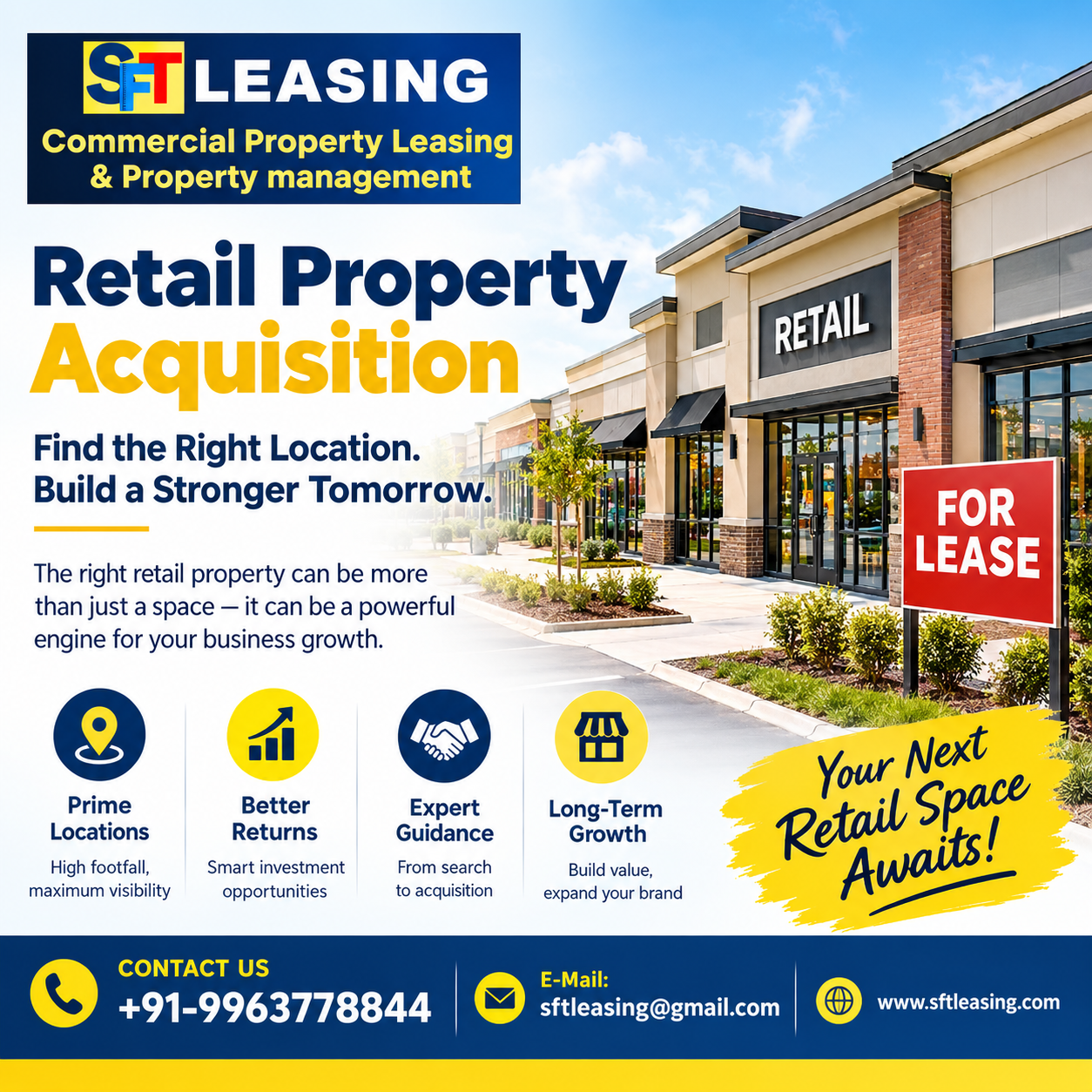
What Is Retail Property Acquisition?
Retail property acquisition is the process of identifying, evaluating, negotiating, and purchasing commercial properties designed for retail businesses. These properties can include:
- Shopping centers
- High-street retail spaces
- Standalone retail buildings
- Neighborhood shopping centers
- Malls and commercial complexes
- Mixed-use developments with retail units
- Retail spaces occupied by established brands
The objective is generally to acquire a property that offers attractive income potential, capital appreciation, strategic positioning, or a combination of these benefits.
Why Location Matters in Retail Property Investment
Location is one of the most important factors in determining the success of a retail property.
A property may have excellent construction and attractive pricing, but poor accessibility or limited customer traffic can reduce its investment potential.
When evaluating a location, consider:
- Foot traffic: How many potential customers visit the area?
- Vehicle traffic: Is the property located on a busy road or commercial corridor?
- Accessibility: Can customers easily reach the property?
- Parking: Is sufficient parking available?
- Visibility: Can the property be easily seen from major roads?
- Nearby businesses: Are complementary retailers and businesses located nearby?
- Demographics: Does the surrounding population match the target customer base?
- Future development: Are new residential, commercial, or infrastructure projects planned nearby?
A strong location can support higher occupancy, better rental demand, and long-term property appreciation.
1. Analyze the Local Market
Before acquiring a retail property, conduct thorough market research.
Study the local supply and demand for retail space, rental rates, vacancy levels, consumer demographics, and competing properties. Understanding the market helps you determine whether the property is realistically priced and whether future rental growth is possible.
Look for areas experiencing:
- Population growth
- Increasing household income
- New residential development
- Improved infrastructure
- Growing business activity
- Increasing consumer spending
- Limited availability of quality retail space
These indicators can point toward stronger long-term investment opportunities.
2. Evaluate Tenant Quality and Stability
For an income-producing retail property, tenants are a critical part of the investment.
A property occupied by financially stable and reputable tenants may provide more predictable rental income. Review existing leases carefully and examine:
- Tenant financial strength
- Lease duration
- Rental escalation clauses
- Security deposits
- Renewal options
- Vacancy history
- Tenant concentration
- Maintenance responsibilities
A property with several strong tenants can sometimes offer better risk diversification than one that depends heavily on a single occupant.
3. Examine the Property’s Financial Performance
Never evaluate a retail property solely based on its purchase price.
Review the property’s complete financial picture, including:
- Current rental income
- Operating expenses
- Property taxes
- Maintenance costs
- Insurance
- Management expenses
- Vacancy losses
- Potential capital expenditures
- Net operating income (NOI)
Investors can then assess metrics such as capitalization rate (cap rate), cash flow, and potential return on investment.
The goal is to understand how much income the property can realistically generate after expenses.
4. Assess the Property’s Physical Condition
A property inspection can uncover issues that may significantly affect the investment.
Evaluate:
- Building structure
- Roofing
- Electrical systems
- Plumbing
- HVAC systems
- Flooring and interiors
- Parking areas
- Signage
- Fire and safety systems
- Accessibility
- Common areas
Major repairs or renovations can increase the total acquisition cost. Understanding these expenses before purchasing helps prevent unexpected financial surprises.
5. Consider Future Growth Potential
The best retail investments are not always the properties generating the highest income today. Some opportunities may have significant potential for future growth.
Investigate upcoming:
- Roads and transportation projects
- Residential communities
- Office developments
- Shopping centers
- Schools and institutions
- Infrastructure improvements
- Business districts
A location that is currently developing may offer opportunities for rental growth and property appreciation over the long term.
6. Study the Competition
Understanding nearby retail properties is essential.
Compare the target property with similar properties in the surrounding market. Consider rental rates, occupancy, tenant quality, amenities, accessibility, and customer traffic.
Ask:
Why would a retailer choose this property over another nearby location?
If the property has a clear competitive advantage, such as superior visibility, accessibility, parking, location, or tenant mix, it may have stronger investment potential.
7. Understand Zoning and Legal Requirements
Before completing a retail property acquisition, verify that the property’s zoning and permitted uses align with your investment strategy.
Review:
- Zoning regulations
- Permitted commercial activities
- Building approvals
- Property title
- Existing leases
- Development restrictions
- Environmental requirements
- Local regulations
- Outstanding legal issues
Professional legal and property due diligence can help identify potential problems before the transaction is completed.
8. Calculate the Total Investment Cost
The purchase price is only one component of the total investment.
Your financial assessment should consider:
Total Investment = Purchase Price + Acquisition Costs + Renovation Costs + Financing Costs + Initial Operating Expenses
Depending on the transaction, additional costs may include taxes, registration charges, professional fees, brokerage, repairs, renovations, and financing expenses.
Calculating the complete investment requirement gives you a more realistic picture of the property’s potential return.
9. Negotiate Based on Data
Once you identify a promising retail property, use market research and financial analysis to support your negotiation.
Consider negotiating based on:
- Comparable property prices
- Rental income
- Vacancy rates
- Required repairs
- Lease terms
- Market conditions
- Expected future expenses
- Financing considerations
A well-researched negotiation can significantly improve the overall economics of an acquisition.
10. Work With Retail Property Acquisition Professionals
Retail real estate transactions can involve significant financial commitments and complex negotiations. Working with experienced commercial real estate professionals can make the acquisition process more efficient.
A professional advisor can assist with:
- Identifying suitable properties
- Market research
- Property evaluation
- Financial analysis
- Site selection
- Due diligence coordination
- Lease analysis
- Negotiation
- Transaction support
Expert guidance can help investors identify opportunities that may not be immediately obvious and avoid costly mistakes.
Key Questions to Ask Before Buying a Retail Property
Before proceeding with an acquisition, ask:
- Is the location suitable for long-term retail demand?
- Who are the existing or potential tenants?
- Is the current rental income sustainable?
- What are the property’s operating expenses?
- Are major repairs or renovations required?
- What competing properties exist nearby?
- What developments are planned in the surrounding area?
- Are there any legal, zoning, or title concerns?
- What is the expected return on investment?
- Does the property fit my long-term investment strategy?
Conclusion
Retail property acquisition can offer attractive opportunities for investors seeking rental income and long-term capital growth. However, finding the right investment requires careful research rather than focusing solely on purchase price or location.
By analyzing market conditions, tenant quality, financial performance, property condition, competition, future development, and legal considerations, investors can make better-informed acquisition decisions.
The right retail property is one that combines strong location fundamentals, sustainable income, manageable risks, and long-term growth potential. With proper due diligence and professional guidance, investors can turn retail real estate opportunities into valuable long-term assets.