

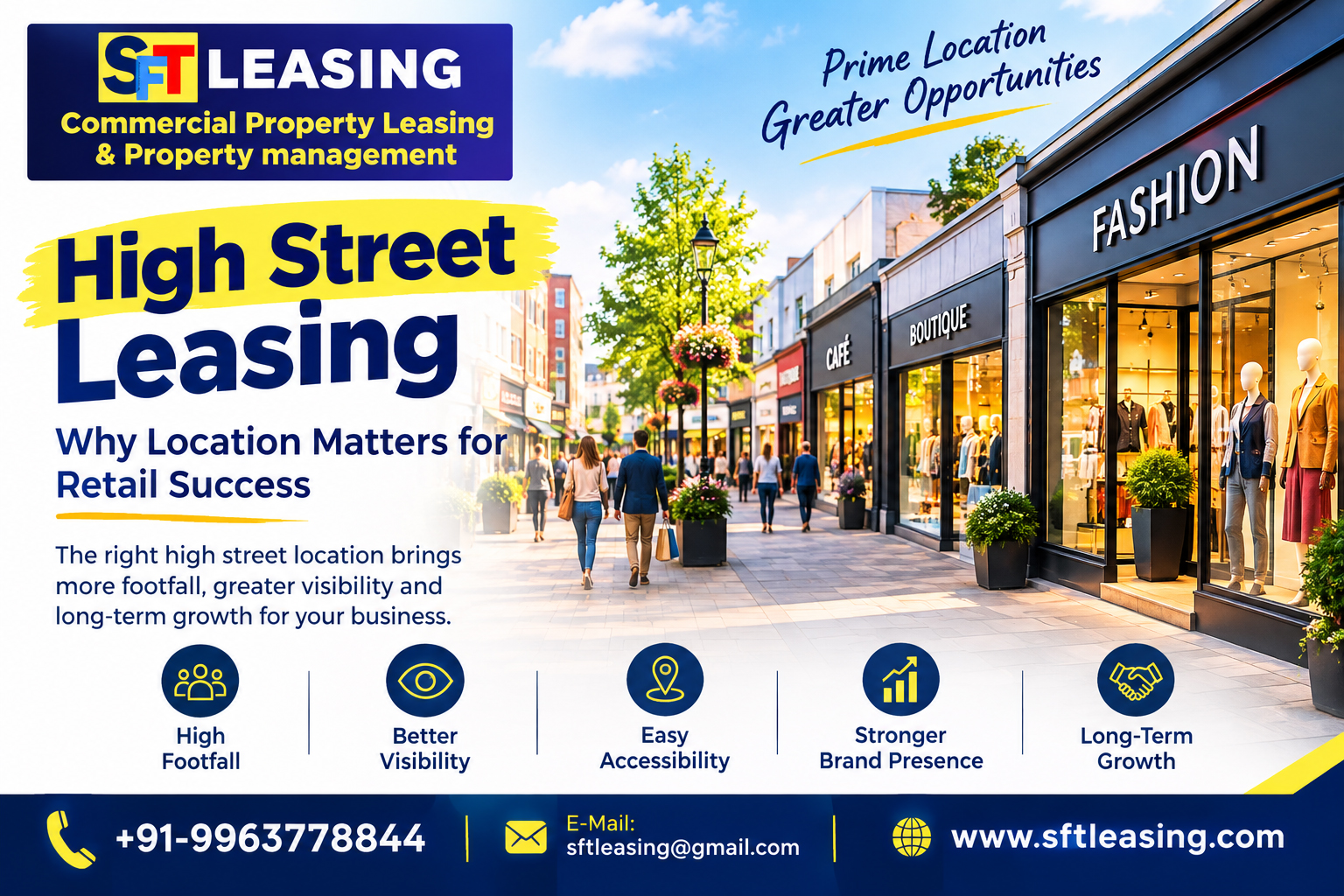
High Street Leasing: Why Location Matters for Retail Success
For retail businesses, location can be one of the biggest factors influencing success. A well-positioned store can attract more customers, improve brand visibility, and generate consistent sales, while a poorly located property may struggle even when the products and services are excellent.
This is why high street leasing has become an important strategy for retailers looking to establish themselves in busy and commercially active areas.
What Is High Street Leasing?
High street leasing refers to renting retail space in established commercial streets or prime retail destinations where there is strong pedestrian traffic, vehicle movement, visibility, and customer activity.
High street properties are commonly suitable for:
- Fashion and lifestyle stores
- Restaurants and cafés
- Jewellery and luxury brands
- Salons and beauty businesses
- Electronics stores
- Pharmacies and healthcare outlets
- Supermarkets and specialty retailers
- Banks and financial service outlets
The right high street location can provide a business with immediate exposure to an existing customer base.
Why Location Matters in Retail
1. Higher Customer Footfall
Busy high streets naturally attract large numbers of people. A location with consistent pedestrian traffic can increase the number of potential customers entering your store.
However, it is important to understand whether the footfall matches your target audience, rather than focusing only on the number of visitors.
2. Better Brand Visibility
A prominent storefront can act as a powerful marketing tool. Good visibility from roads, sidewalks, intersections, and nearby commercial establishments can help customers notice and remember your brand.
A strategically positioned store can also reduce the amount a business needs to spend on customer acquisition.
3. Easier Customer Access
Accessibility plays a major role in retail success. Customers are more likely to visit stores that are easy to reach.
When evaluating a high street property, consider:
- Road connectivity
- Parking availability
- Public transportation
- Entry and exit points
- Pedestrian accessibility
- Nearby residential and commercial areas
Convenient access can directly influence customer visits and repeat business.
4. Stronger Business Environment
Established high streets often have a combination of retailers, restaurants, offices, banks, entertainment venues, and other businesses.
This creates a commercial ecosystem that can attract customers throughout the day.
In some cases, being located near complementary businesses can also benefit retailers through shared customer traffic.
5. Builds Customer Trust
A business operating from a well-known commercial location may appear more established and credible.
For new brands especially, a strong physical presence in a recognised retail destination can help build customer confidence and strengthen the brand image.
6. Understanding the Target Market
Not every high street is suitable for every retail business.
Before signing a lease, businesses should study:
- Customer demographics
- Average spending patterns
- Local competition
- Residential population
- Nearby offices
- Existing retail brands
- Peak traffic hours
- Customer preferences
The objective is to choose a location where your target customers already spend time.
7. Competition Can Be an Advantage
Retailers sometimes avoid locations with competitors, but competition is not always negative.
A cluster of similar businesses can create a recognised shopping destination and attract customers specifically looking for those products or services.
The key is to determine whether the market has enough demand to support another business.
Key Factors to Evaluate Before Leasing
Before committing to a high street property, consider the complete cost and commercial potential.
Location
Is the property positioned in a high-visibility and commercially active area?
Rental Cost
Does the expected revenue justify the rent and other occupancy expenses?
Storefront Visibility
Can customers easily see your signage and entrance?
Footfall Quality
Are the people passing by actually your potential customers?
Parking & Accessibility
Can customers conveniently reach and visit your store?
Property Size & Layout
Does the space support your store design, inventory, customer movement, and operations?
Lease Terms
Review the lease duration, security deposit, rent escalation, maintenance charges, renewal options, permitted use, and exit conditions carefully.
Future Development
Consider upcoming infrastructure, residential projects, commercial developments, and changes that could affect the location’s future potential.
High Street Leasing vs. Other Retail Locations
High street properties can offer excellent visibility and natural customer traffic, but they may also come with higher rental costs.
Shopping centres may provide organised retail environments and shared amenities, while neighbourhood locations may offer lower costs and strong local customer relationships.
Therefore, the best location depends on your business model, target customers, budget, and growth strategy.
How a Commercial Leasing Consultant Can Help
Finding the right high street property involves more than simply searching for available shops.
A professional commercial leasing consultant can help businesses:
- Identify suitable retail locations
- Analyse market conditions
- Compare available properties
- Evaluate rental values
- Negotiate lease terms
- Coordinate property visits
- Assess commercial suitability
- Support documentation and registration
- Reduce the risk of making an unsuitable property decision
Professional guidance can save businesses considerable time and help them make more informed leasing decisions.
Conclusion
In retail, location is more than an address—it is a business strategy.
The right high street property can improve visibility, attract relevant customers, strengthen brand credibility, and create opportunities for long-term growth. But choosing the right location requires careful research into footfall, accessibility, competition, rental costs, customer demographics, and lease terms.
Before signing a high street lease, businesses should evaluate not only where the property is located, but also why that location is right for their customers and business model.
Choose the right location. Negotiate the right lease. Build your retail business for long-term success.