
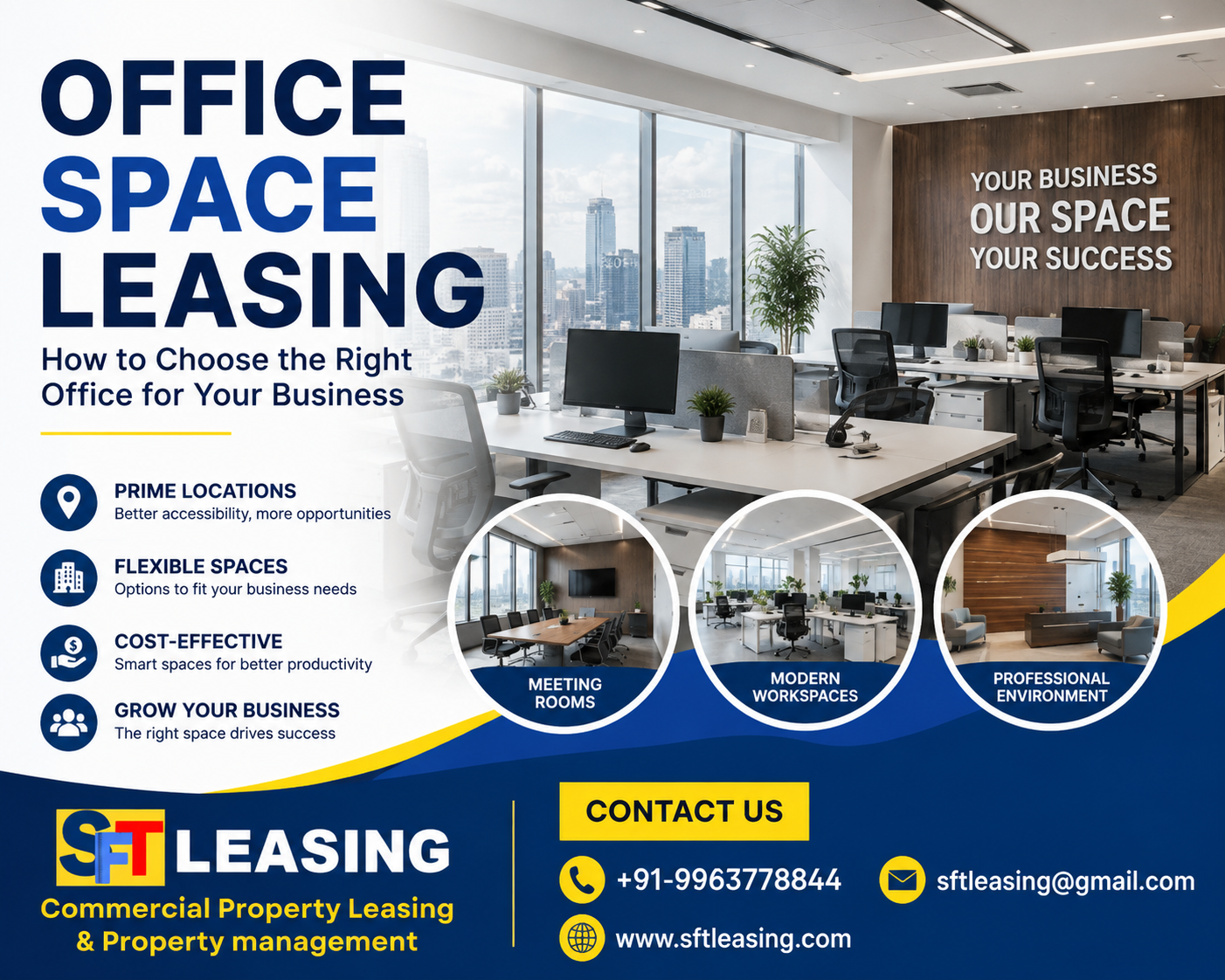
Office Space Leasing, How to Choose the Right Office for Your Business
Choosing the right office space is an important business decision. Your office affects your employees, clients, operating costs, brand image, and long-term growth. Whether you are a startup looking for your first office or an established company planning an expansion, finding the right space requires careful evaluation.
Here are the key factors to consider when leasing an office for your business.
1. Choose the Right Location
Location is one of the most important factors in office leasing. A convenient and accessible location can help attract employees, impress clients, and improve your business visibility.
Consider:
- Accessibility by road and public transportation
- Proximity to major business areas
- Availability of parking
- Nearby restaurants, banks, and essential services
- Safety and overall neighborhood quality
- Convenience for employees and clients
A slightly higher rent in a strategic location may provide greater value than a cheaper office in an inconvenient area.
2. Determine the Right Office Size
Avoid leasing more space than you currently need, but also consider your future growth.
Evaluate:
- Number of employees
- Workstations required
- Meeting and conference rooms
- Reception area
- Storage requirements
- Break rooms and common areas
- Future hiring plans
A flexible office layout can allow your business to grow without requiring an immediate relocation.
3. Set a Realistic Budget
Rent is only one part of the total cost of leasing an office. Before signing a lease, calculate the complete occupancy cost.
Consider expenses such as:
- Monthly rent
- Security deposit
- Maintenance and common-area charges
- Electricity and water
- Internet and communication services
- Parking charges
- Interior design and fit-out costs
- Property taxes or other applicable charges
Understanding the total cost will help you avoid unexpected expenses.
4. Check the Building and Office Facilities
The quality of the building can directly affect employee productivity and your company’s professional image.
Check whether the property provides:
- Reliable power supply
- High-speed internet connectivity
- Elevators
- Adequate ventilation and lighting
- Security systems
- Fire safety facilities
- Parking
- Maintenance services
- Backup power
- Cafeteria or common facilities
Visit the property personally and inspect the facilities before making a decision.
5. Consider Your Brand Image
Your office is often the first physical impression clients and business partners have of your company.
Choose an office that reflects your brand and business standards. A professional building in a suitable commercial location can strengthen your company’s credibility and create a positive experience for visitors.
6. Understand the Lease Terms
Never sign a lease without carefully reviewing the agreement.
Pay attention to:
- Lease duration
- Rent escalation clauses
- Security deposit
- Renewal options
- Notice period
- Maintenance responsibilities
- Subleasing or assignment conditions
- Fit-out and renovation permissions
- Exit or termination clauses
If necessary, consult a qualified legal or real estate professional before signing.
7. Think About Employee Convenience
A good office should work for your employees as well as your customers.
Consider commute times, public transportation, parking availability, nearby food options, workplace comfort, and the overall environment.
Employee convenience can contribute to better satisfaction, productivity, and retention.
8. Evaluate Flexibility and Future Growth
Your business may change significantly during the lease period. Look for office spaces that can adapt to changing requirements.
Ask whether you can:
- Expand into additional space
- Modify the office layout
- Add workstations
- Renew the lease
- Reduce space if business requirements change
Flexible lease terms can provide valuable protection as your business evolves.
9. Compare Multiple Properties
Don’t choose the first office you visit. Compare several properties based on location, rent, facilities, accessibility, lease terms, and overall value.
Creating a simple comparison can make it easier to identify which property offers the best combination of cost and business benefits.
10. Work With a Commercial Real Estate Advisor
Finding the right office can take considerable time and effort. A professional commercial real estate advisor can help you identify suitable properties, compare options, understand market conditions, negotiate lease terms, and complete the leasing process more efficiently.
Conclusion
Choosing the right office space is more than finding a place to work. It is a strategic business decision that can influence your company’s image, employee experience, operating costs, and future growth.
By carefully evaluating the location, size, budget, facilities, lease terms, employee convenience, and future requirements, you can select an office that supports your business today and creates room for tomorrow’s success.
Looking for the right commercial office space? Professional commercial real estate guidance can help you make a confident and informed leasing decision.