
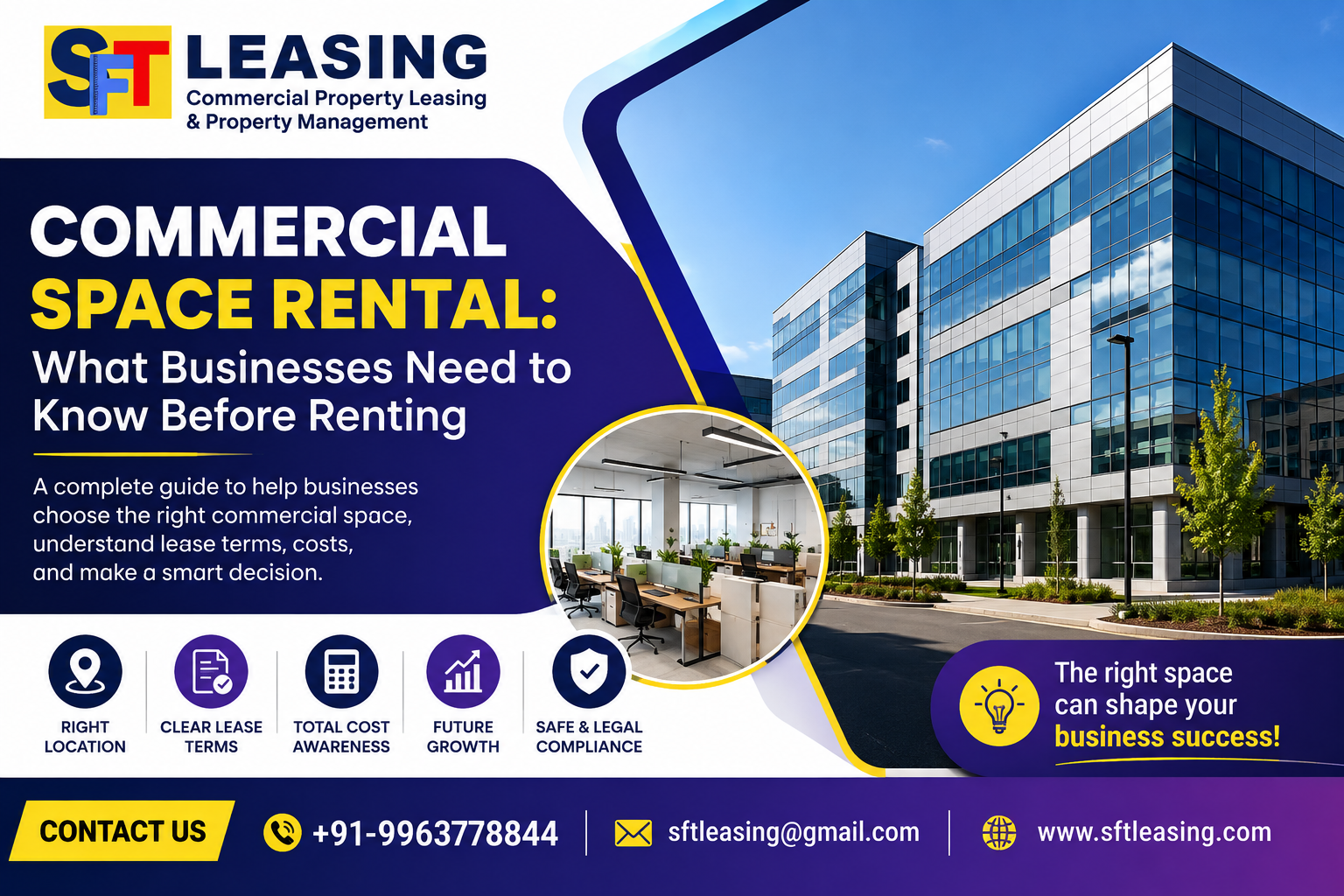
Commercial Space Rental, What Businesses Need to Know Before Renting
Finding the right commercial space is an important decision for any business. Whether you are starting a new venture, expanding your operations, or relocating to a better location, the space you rent can directly affect your costs, customer experience, employee productivity, and long-term growth.
Before signing a commercial rental agreement, businesses should carefully evaluate the property, lease terms, location, costs, and future requirements.
1. Choose the Right Location
Location is one of the most important factors when renting commercial space. A good location can improve visibility, attract customers, and make it easier for employees and suppliers to reach your business.
Consider:
- Customer accessibility
- Foot traffic and visibility
- Parking availability
- Public transportation
- Nearby businesses and competitors
- Road connectivity
- Safety and surrounding infrastructure
The ideal location depends on your business type. A retail store may benefit from high foot traffic, while an office may prioritize accessibility, parking, and a professional environment.
2. Understand the Total Rental Cost
The advertised rent is not always the complete cost of occupying a commercial property. Before making a decision, understand all additional expenses.
These may include:
- Monthly rent
- Security deposit
- Maintenance charges
- Common-area maintenance costs
- Property taxes, where applicable
- Utility expenses
- Parking fees
- Insurance
- Repairs and maintenance
- Applicable taxes and other charges
Ask the landlord or property manager for a clear breakdown of the expected monthly and annual costs.
3. Carefully Review the Lease Agreement
Never sign a commercial lease without understanding its terms. The agreement should clearly explain the rights and responsibilities of both the landlord and tenant.
Pay attention to:
- Lease duration
- Rent amount
- Rent escalation clauses
- Security deposit
- Renewal terms
- Notice period
- Termination conditions
- Maintenance responsibilities
- Subleasing or assignment provisions
- Restrictions on business activities
- Rules regarding alterations and signage
If any clause is unclear, consider getting advice from a qualified legal or real estate professional before signing.
4. Check the Size and Layout
A commercial space should support your current operations while providing enough flexibility for future growth.
Evaluate:
- Total usable area
- Office or showroom layout
- Storage space
- Meeting areas
- Restrooms
- Reception area
- Power supply
- Internet connectivity
- Emergency exits
- Loading and unloading facilities
Do not choose a property based only on its total square footage. The usable layout is equally important.
5. Inspect the Property Before Renting
Always conduct a physical inspection before finalizing the property.
Check the condition of:
- Flooring and walls
- Electrical systems
- Plumbing
- Air conditioning
- Lighting
- Elevators
- Fire safety equipment
- Security systems
- Parking facilities
- Common areas
Document any existing damage and discuss necessary repairs with the landlord before signing the agreement.
6. Consider Business Regulations and Permissions
Make sure the property is suitable for your intended business activity. Certain businesses may require specific permissions, zoning compliance, licenses, or building approvals.
Before renting, verify that:
- The property can legally be used for your business activity.
- Required commercial permissions are available.
- Fire and safety requirements are satisfied.
- Signage is permitted.
- Your business can obtain the necessary local licenses and registrations.
This can help prevent costly problems after moving into the property.
7. Evaluate Parking and Accessibility
Parking can have a significant impact on customer convenience and employee satisfaction.
Consider whether the property provides:
- Sufficient customer parking
- Employee parking
- Visitor parking
- Two-wheeler parking
- Easy vehicle access
- Accessibility for people with disabilities
For retail stores, clinics, restaurants, offices, and service businesses, convenient access can be an important competitive advantage.
8. Think About Future Business Growth
Your business may look very different a few years from now. Before signing a long-term lease, consider whether the property can accommodate future expansion.
Ask yourself:
- Will the space be large enough as the team grows?
- Can additional space be rented nearby?
- Is expansion within the same building possible?
- Does the lease provide renewal options?
- How much could the rent increase over time?
Planning ahead can reduce the disruption and expense of relocating again.
9. Negotiate the Lease Terms
Commercial lease terms are often negotiable. Do not assume that the first offer is the final offer.
Depending on the property and market, you may be able to negotiate:
- Monthly rent
- Security deposit
- Rent-free fit-out period
- Rent escalation
- Lease duration
- Renewal options
- Maintenance responsibilities
- Parking arrangements
- Interior modification permissions
A well-negotiated lease can significantly improve your business’s long-term occupancy costs.
10. Understand Maintenance Responsibilities
Clarify who is responsible for repairs and maintenance before signing the agreement.
For example, determine responsibility for:
- Electrical repairs
- Plumbing
- Air conditioning
- Structural repairs
- Common-area maintenance
- Lift maintenance
- Security
- Cleaning
- Pest control
Clearly defined responsibilities can help prevent disagreements later.
11. Check the Surrounding Business Environment
The businesses surrounding your commercial space can influence your success.
Look for complementary businesses that may bring potential customers to the area. At the same time, consider whether nearby competitors could affect your business.
For example, a food outlet may benefit from being near offices, shopping areas, or entertainment venues, while a professional office may benefit from being in an established commercial district.
12. Calculate the Long-Term Value
The cheapest commercial space is not always the best option. A slightly more expensive property in a strategic location may generate better business opportunities.
Compare properties based on:
Total Cost + Location + Accessibility + Facilities + Business Potential + Lease Flexibility
This broader evaluation can help you make a more informed decision.
Final Thoughts
Renting a commercial space is a major business commitment. Taking time to evaluate the location, costs, lease agreement, property condition, accessibility, facilities, and future growth potential can help you avoid expensive mistakes.
Before signing a lease, compare multiple properties, understand the complete cost structure, inspect the premises carefully, and review the agreement thoroughly.
The right commercial space is more than just a place to operate—it can become an important foundation for your business growth and success.
Need Help Finding the Right Commercial Space?
Whether you are looking for an office, retail outlet, showroom, warehouse, or other commercial property, professional real estate guidance can make the search easier and more efficient.
Find the right space. Negotiate the right terms. Build your business in the right location.